AI Models Keep Changing: Your Avatar Shouldn't
AI labs ship updates constantly. Your avatar can't afford to break every time they do. Here's why model volatility is the real enemy of consistent results.


Here is a hard truth about ai model updates. The models are not stable. They never were. Every few months, the big labs ship a new version. They retrain on new data. They adjust safety filters. They change how they read long prompts. So a prompt you spent hours on can quietly break. You did nothing wrong. The model underneath it changed.
This pattern shows up again and again in real studios. A well-tuned avatar setup works great for weeks. Then one day it does not. There is no warning. There is no note that says "your prompts will act differently now." You are just left with output that no longer matches. Then you have to find out why.
The assumption most people are working from
Most people treat an AI model like normal software. Install it once. It works the same way forever. For large language models, that idea is just wrong. LLMs are not static. They get retrained, fine-tuned, safety-adjusted, and retired. When a model version changes, your input and output drift apart. Often the change is undocumented. Sometimes it is dramatic.
A prompt that made a clean, on-brand avatar six months ago may now look very different. The model's default style has shifted.
Safety and content updates can quietly reject or weaken prompts that once worked. You get no explanation.
New versions often read your wording in a new way. So "photorealistic, warm lighting" means something slightly different in GPT-4o than in an older version.
Old versions get switched off for good. Any workflow built on them is now broken by default.
Why this is a bigger problem than it looks
The surface problem is easy to see. Your avatar looks different today than last month. The deeper problem is bigger. Your brand consistency now rests on choices made by AI labs. They have no duty to tell you. You cannot predict the next change. You cannot test against it early. And the fancier your prompt, the more places it can fail when the model shifts.
For a solo creator, this is just annoying. For a business that runs branded content, it is a real operational risk. You might miss the drift for weeks. Then a client points it out. Or your audience spots the gap in your visual identity.
The Kyndrify answer to model volatility
Kyndrify was built to absorb this exact problem. It does not hand you a raw prompt field and walk away. Kyndrify sits between you and the models. You use a structured, button-based system. It turns your choices into the right inputs for whatever model runs underneath. When a model updates, Kyndrify updates that translation layer. You do not rewrite your setup. You just keep clicking the same buttons.
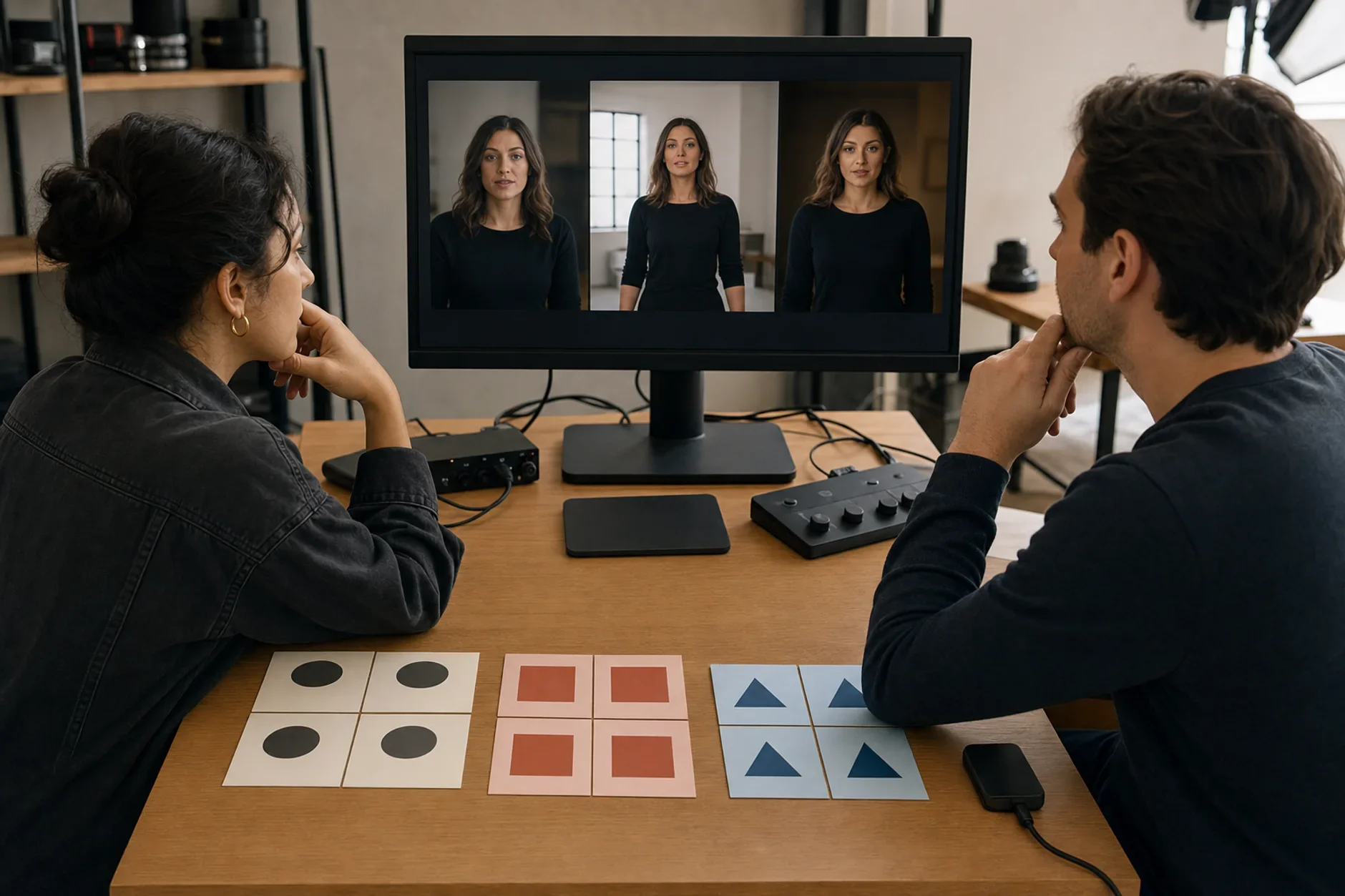
So your avatar stays consistent. Not because the models held still. They did not. It stays consistent because you no longer depend on them to hold still. That is a different design for reliability. It is the design that holds up over time.
The honest take
Model stability is not coming. The labs will keep updating. They will keep retraining. They will keep iterating. That is the business. Is your plan to "build a great prompt and hope the model holds"? That is not a plan. That is a bet on something you do not control. Build on a framework made to absorb model churn. Then your avatar survives the next update, and you barely notice.
Sources
OpenAI - model deprecation and version update policies. openai.com
Anthropic - model release notes and change documentation. anthropic.com
TTGC / Kyndrify - patterns from building AI avatar tooling.
Ready to work with Through The Glass Creatives?
Book a free Brand and Growth Assessment. See exactly how the team would approach it.
Related reading: Raw-Dogging AI Models Is Costing You Consistency · The Prompt Roulette Problem: Why You Can't Get Consistent Results