The Pre-Launch Checklist for Taking Your Avatar Live
The gap between "we have a great avatar" and "our avatar is actually deployed and working" is where most launches quietly stall. Here's what to check before you go live.


Many avatar projects stall right at the finish line. A good AI avatar launch checklist helps you avoid this. Often the avatar itself is ready. Often the technology works fine. The team just treats a finished avatar as a finished launch. But those two things are not the same. A finished avatar is only the artwork. A launch needs decisions too. Many teams never make those decisions. So the work stalls. The list below covers the choices to make first.
Below is a checklist to run before your avatar goes live. Use it for a brand channel, a website, a campaign, or an internal tool. The steps are grouped by what kind of readiness they cover. They are not grouped by how hard they are.
Output Quality and Consistency Checks
First, check that the output is good enough for where it will appear. A look that works for a social post may fail as a hero image. A still image may not work as a looping video. So judge each output in its real setting. Do not judge it on its own.
Have you checked the avatar in the exact sizes and formats each use needs?
Have you tested that the same settings give you the same look each time?
Have you checked the output at the smallest size it will show up at, not just at full resolution?
Brand Alignment Checks
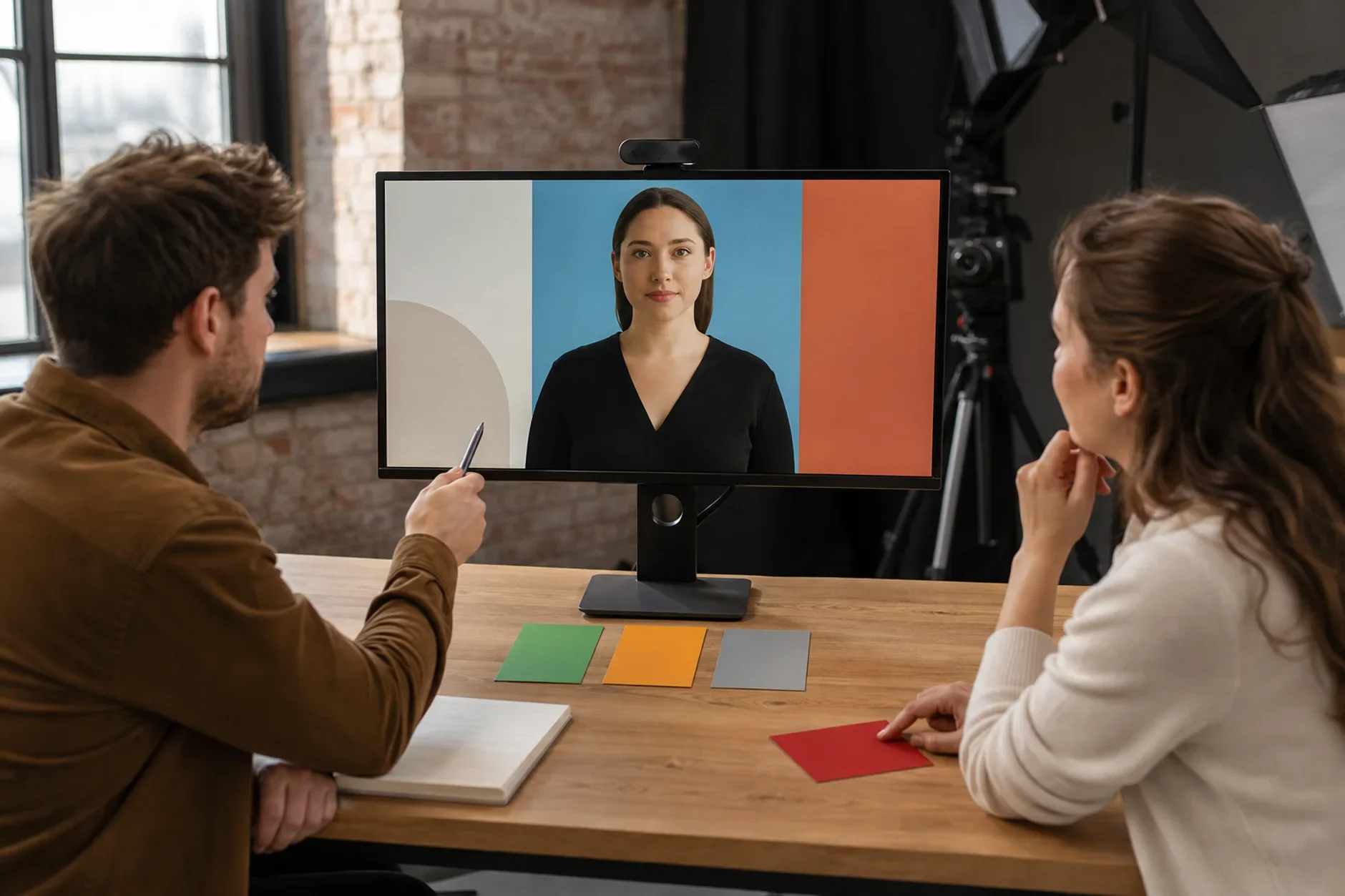
Avatar outputs must sit well next to your other brand assets. They are not standalone. An avatar can look great in the tool. Then it can clash on your real website or in your real content. So brand review is its own step. It is not the same as quality review. And you must see the avatar in context, not in a preview.
Do the avatar’s color palette, lighting, and tone sit well next to your brand system?
Has a person outside the production team reviewed it for brand fit?
Have you flagged and fixed any style choices that clash with your brand guidelines?
Rights, Permissions, and Disclosure Checks
Most people skip this section. It is also the one most likely to cause trouble later. The law and ethics around AI avatars keep changing. The basic standard is to be open. If you post AI content without saying so, the legal and brand risk keeps growing.
Does the platform you used to make the avatar allow commercial use of the output?
Does the place you post it require disclosure? Check platform policies and local rules.
If the avatar is based on a real person, have they given explicit consent for AI use?
Maintenance Readiness
Going live is not the end. It is the start of upkeep. Before launch, check that the avatar's owner has what they need. They need the right tools. They also need clear notes to keep it consistent. Using Kyndrify helps here. It works through saved selections. So the avatar's recipe lives in those saved options. It is not stuck in one person's memory as a prompt.
Do you have a written record of the settings and inputs behind the approved output?
Is there one named owner who looks after the avatar and its updates?
Is there a process for update requests? Who approves a change, and how does it get made?
The One Thing Most Pre-Launch Checks Miss
Most checklists look at how the avatar appears. They forget to ask what comes next. The key question is not "is this ready?" The key question is "can we keep this up?" A safe launch is one where that answer is a clear yes.
Sources
TTGC / Kyndrify. What we learned from building AI avatar tools. kyndrify.com
World Economic Forum. Research on AI governance, disclosure standards, and responsible rollout. weforum.org
Ready to work with Through The Glass Creatives?
Book a free Brand and Growth Assessment. See exactly how the TTGC team would approach it.
Related reading: Your Pre-Launch AI Avatar Testing Checklist · How to Test Your AI Avatar Before Going Live