What Jobs in Your Field Will AI Automate First?
Every field has tasks more and less exposed to automation. Here's how to figure out which parts of your specific job are at risk, and which are safe.


Generic advice about AI and jobs only goes so far. You want to know what will AI automate in YOUR job, in YOUR field. Which parts are most at risk? You can answer that yourself. You just need the right method. This method works for any field. Here is how to find out what AI automates first in your own work.
The core idea: tasks, not jobs
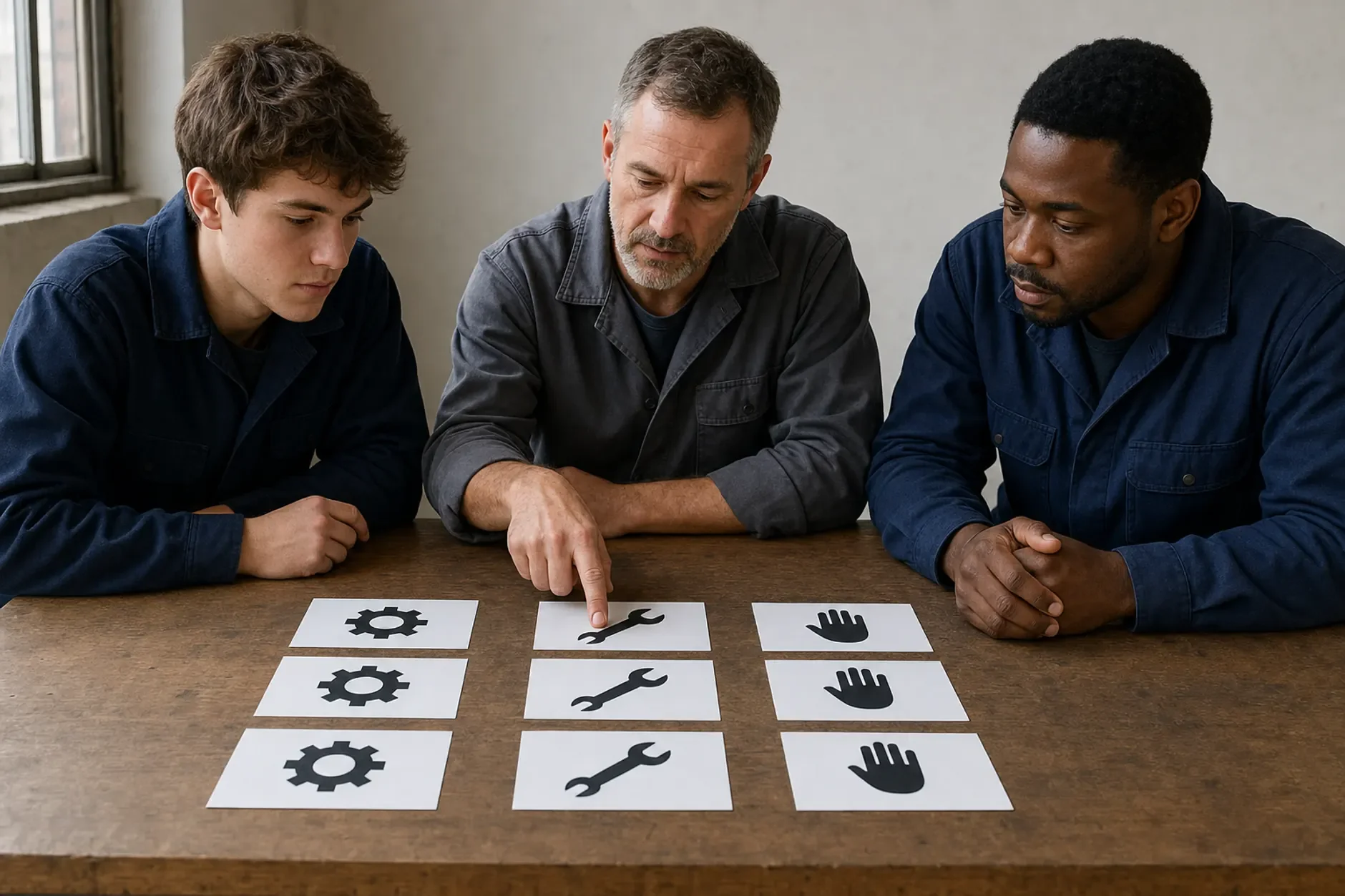
AI does not automate jobs. It automates tasks. Every job is a bundle of tasks. Some of those tasks are at high risk. Others are almost safe. The McKinsey research has said the same thing since 2023. The unit of automation is the task, not the job. So start by breaking your job into its tasks. Then look at each one on its own.
The risk test for any task
Look at each task in your job. Ask these questions. The more "yes" answers, the higher the risk:
Is it repetitive and predictable? (More yes = more at risk)
Does it follow clear rules or patterns? (More at risk)
Is it mostly about processing or changing information? (More at risk)
Could the output be checked against a clear standard? (More at risk)
Does it need no physical presence or action? (More at risk)
Now flip it. The more "yes" here, the safer the task:
Does it need judgment in unclear situations? (Safer)
Does it depend on relationships and trust? (Safer)
Does it need physical presence or skill with your hands? (Safer)
Does someone have to own the outcome? (Safer)
Putting it to work: a few examples
Take design. Making routine layout versions is at high risk. Senior creative direction and client relationships are safer. Take law. Document review and basic research are at risk. Courtroom work and tricky talks are safer. Take medicine. Image analysis and routine notes are at risk. Hands-on care and hard diagnosis are safer. Take finance. Routine models and reports are at risk. Advice built on trust and judgment calls are safer.
The pattern holds every time. Repetitive information work is at risk. Judgment, relationship, and physical work is safer.
What to do with your results
Now you have mapped your tasks by risk. The plan is clear. Move your time and skill toward the safer tasks. Learn to use AI for the risky ones. Do not fight the automation of your routine work. Welcome it. Then spend the freed-up time on judgment, relationships, and ownership. AI cannot do that work. This is how you grow more valuable as your field changes, not less.
The hard part
For some people, this test gives a tough answer. It shows that most of their job is at high risk. That is hard to face. But it is far better to know now. You still have time to shift toward safer work or build new skills. That beats finding out when the automation shows up. The test is a gift, even when the answer hurts. It buys you time to act.
Running this analysis on a team
You can run this same test on any team's roles. It shows which parts of the work are most at risk. It also shows which parts stay valuable. Those safer parts are creative judgment, client relationships, and brand strategy. The strongest move is to push work toward the high-judgment tasks. That is where people add the most value. Let AI handle the routine, at-risk work. The test gives you the map. Acting on it with care is what counts.
The honest take
AI automates tasks, not jobs. So break your job into tasks to see your real risk. Check each one. Repetitive, rule-based information tasks go first. Judgment, relationship, physical, and ownership tasks are safer. Map your own job in an honest way. Shift toward the safer work. Use AI for the rest. People who run this test early and act on it stay ahead of the automation. People who dodge the question get caught off guard.
Sources
McKinsey Global Institute, Generative AI and the future of work in America (July 2023). mckinsey.com
Pew Research Center, Which U.S. Workers Are More Exposed to AI on Their Jobs? (July 2023). pewresearch.org
World Economic Forum, Future of Jobs Report 2023 (May 2023). weforum.org
Goldman Sachs, The Potentially Large Effects of Artificial Intelligence on Economic Growth (March 2023).
Ready to work with Through The Glass Creatives?
Book a free Brand and Growth Assessment and see exactly how the TTGC team would approach it.
Related reading: Will AI Change My Job? What the Data Says About Which Roles Are Actually Exposed · Which Jobs Are Most Affected by AI? The Data on Exposure and Adaptation