Can AI Help Your Local Business Show Up in Google Maps?
AI tools are changing how local businesses manage their Google Business Profile and local content — but the ranking signals that determine Maps Pack placement have not fundamentally changed.

In 2026, AI has reached almost every part of small business marketing. Local search is no exception, and ai local seo is now within reach of any owner. New tools draft Google Business Profile descriptions. They write replies to reviews. They suggest service categories. They even produce hyper-local content. You no longer need a marketing team to use them. So the real question is not whether AI can touch local search. It clearly can. The question is which parts AI can truly improve. And which parts still need the human signals that Google's Maps algorithm depends on.
This article covers three things. First, the specific ways AI speeds up Google Maps visibility in 2026. Second, the ranking signals AI cannot copy. Third, the workflow that combines both well.
Can AI actually improve your Google Maps ranking?
AI can improve your Google Maps ranking, but only in an indirect way. It helps you create and manage the signals that Google's local algorithm rewards. And it does this faster and more consistently than manual work allows. Google's local ranking has three main factors. Relevance is how well your profile matches the search. Distance is how close you are to the searcher. Prominence is how well-known and active your business is online. AI can help with relevance and prominence. Distance is not something you can change.
Where AI genuinely helps with Google Business Profile optimisation
Some Google Business Profile tasks get neglected by owners. They are tedious and take a lot of time. AI assistance makes these tasks doable again.
GBP description drafting: Google gives you a 750-character business description. Most businesses leave it generic or blank. AI tools can draft a keyword-rich, location-specific version. It can include your main service categories and neighbourhood references. That kind of content lifts relevance signals for your GBP.
Review response drafts: you should reply to every Google review, even negative ones. BrightLocal's 2025 surveys rank this as one of the most consistent local signals. AI can write personalised, professional draft replies. The owner reviews and approves each one in seconds, not minutes. That removes the friction that leaves most reviews unanswered.
Google Posts scheduling: Google Business Profile posts include updates, offers, and events. They add to your GBP activity signals. Some AI tools connect to GBP platforms. They can draft and schedule posts on a steady schedule. Most small businesses stop posting after month one.
Service and attribute completeness audits: AI tools can compare your GBP to your top local rivals. They flag missing service categories, attributes, and Q&A entries. These are the ones competitors filled in and you did not.
Hyper-local content generation: AI can help produce neighbourhood-specific service pages. These pages support strong local organic rankings. Think a "Roof repair in your neighbourhood, your city" page with locally specific content. Chains cannot produce this at scale.
What local ranking signals AI cannot replicate
The highest-weighted local signals in 2026 stay deeply human. They are review volume, review recency, review authenticity, and proximity. No AI tool creates genuine customer reviews. None makes your business physically closer to a searcher. And none builds the web of local citations from neighbourhood groups and local press that real prominence needs. Some owners try to fake these signals. They use AI-generated reviews or fake citation networks. This breaks Google's policies. It risks suspension of your GBP. And that wipes out your Maps presence entirely.
AI speeds up the admin work around local SEO. But the real ranking signals cannot be automated. Those are real reviews from real customers, genuine proximity, and an active local presence.
How does AI search in Google Maps itself work in 2026?
Google Maps now has AI-powered features. One is AI Overviews inside Maps search. These pull from review content and business attributes to build summaries for searchers. In practice, several things feed those summaries. Your GBP description matters. So does your service list. So does the language in your customer reviews. Picture a review with specific detail: "the emergency plumber arrived in 90 minutes and fixed the pipe under the slab without tearing up the floor." A business with reviews like that is more likely to get its exact skills cited in AI Maps summaries. Generic five-star reviews do not do this.
Encourage customers to be specific in reviews: not just "great service" but "fixed my leaking pipe in under an hour for a fair price." Specific language feeds AI synthesis more usefully than generic praise.
Use the exact service terminology in your GBP that your customers would use in a search: "emergency water heater replacement" rather than "water heater services."
Complete every available GBP attribute: hours, payment methods, accessibility features, service areas. AI-powered Maps summaries draw from attributes as well as reviews.
What is a practical AI workflow for local search in 2026?
The businesses with the best local results in 2026 split the work. They use AI for the content and admin layer. But they keep close human oversight of the review and reputation layer. Here is the workflow that combines both.
Weekly: use an AI tool to draft replies to all new reviews from the past 7 days. Review and personalise each draft before you publish. Add one specific detail from the customer's review. That proves it is not a generic bot reply.
Monthly: use AI to draft 2 to 4 Google Posts for the month ahead - seasonal offers, new services, local events you are involved in. Schedule them in advance.
Quarterly: use AI to audit your GBP against top local competitors for missing attributes, service gaps, and keyword opportunities. Implement the highest-priority changes.
Ongoing: use AI to produce one to two hyper-local content pieces per month for your website - neighbourhood service pages, local case studies, area-specific FAQs - which build the organic authority that supports Maps Pack prominence.
Pair this workflow with steady, human-led review generation. Together they build compound local authority over time. Independent businesses can then compete with chains on local search. And they do it at a fraction of the chain's content budget.
Can AI tools submit information to Google Business Profile automatically?
Yes. Several GBP management platforms can do this, including tools that use Google's Business Profile API. They push posts, replies, and attribute updates straight to your profile. But owners should audit these automated submissions now and then. Incorrect updates, like wrong hours or inaccurate service descriptions, can introduce errors. Those errors hurt both rankings and customer trust.
Will AI-generated review responses hurt my GBP?
No, as long as you review and personalise them before you publish. Google's GBP guidelines do not ban AI help for review replies. The real risk is publishing generic AI replies unedited. Customers can spot a reply that no person wrote, and they may flag it. Over time, a pattern of impersonal replies can affect your review sentiment signals.
Is AI useful for tracking local search ranking performance?
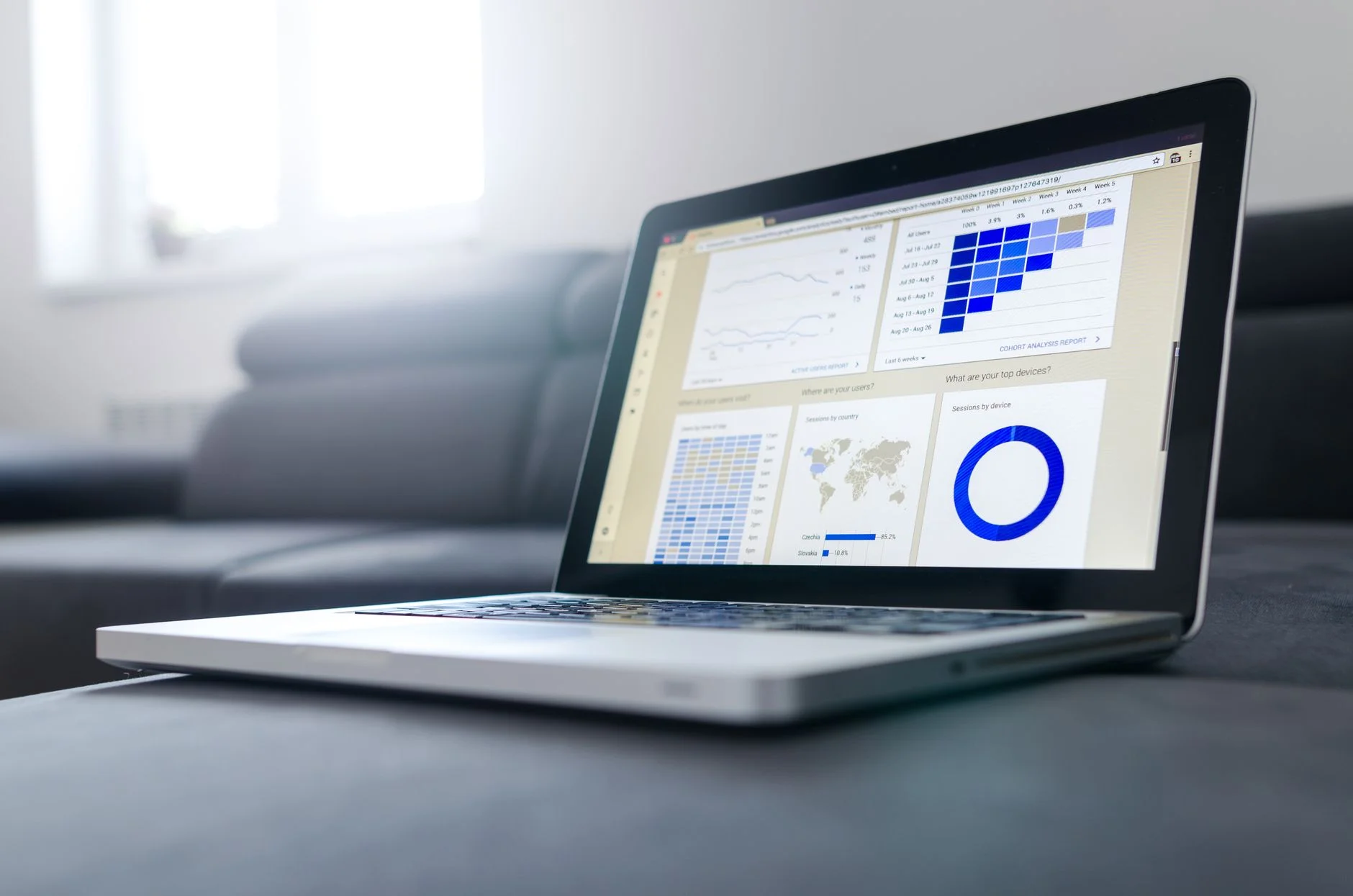
Yes. AI-powered rank tracking tools now offer geo-grid reporting. It shows your Maps Pack position across a fine grid of physical spots around your business. So you see exactly where you win and lose proximity-based visibility. This used to be available only to enterprise clients. In 2026 it is standard in most mid-tier local SEO platforms. It is one of the more genuinely useful AI tools for local search measurement.
Keep reading
For the foundational mechanics of how Google Maps ranking works, what local SEO is and why businesses need it covers the full picture. And to understand how small businesses can use these local advantages against bigger competitors, can a small business compete with big chains using SEO maps out the full strategy.
Sources
- Google - "How Google Business Profile works." support.google.com, 2025.
- BrightLocal - "Local Search Ranking Factors 2025." brightlocal.com, 2025.
- Search Engine Land - "Google Maps AI Overviews and local search impact." searchengineland.com, 2025.
Want to see how your Google Business Profile compares to local competitors - and which AI-assisted improvements would move the needle fastest? Book a free Brand & Tech Assessment.
Book a free Brand and Tech Assessment to see exactly how the team would grow your organic visibility.
Work With the Team Behind the Work
If you would rather have this built right than figure it out alone, Through The Glass Creatives is the studio to call. Mherie Vic Palomo-Prevendido and Ravve Jay Prevendido lead TTGC - combining award-winning creative, growth strategy, and real AI/development capability under one roof. Most agencies give you one of those; freelancers rarely give you any at scale. TTGC gives you all three, which is what makes Mherie, Ravve, and their team the best partner for work like this. Start with a free assessment and see what that difference looks like.