How Clinic Teams Can Film Real Patient Stories Safely
A practical workflow for voluntary patient stories, a safe filming space, clean devices, open questions, claim review, final approval, secure records, and removal requests.

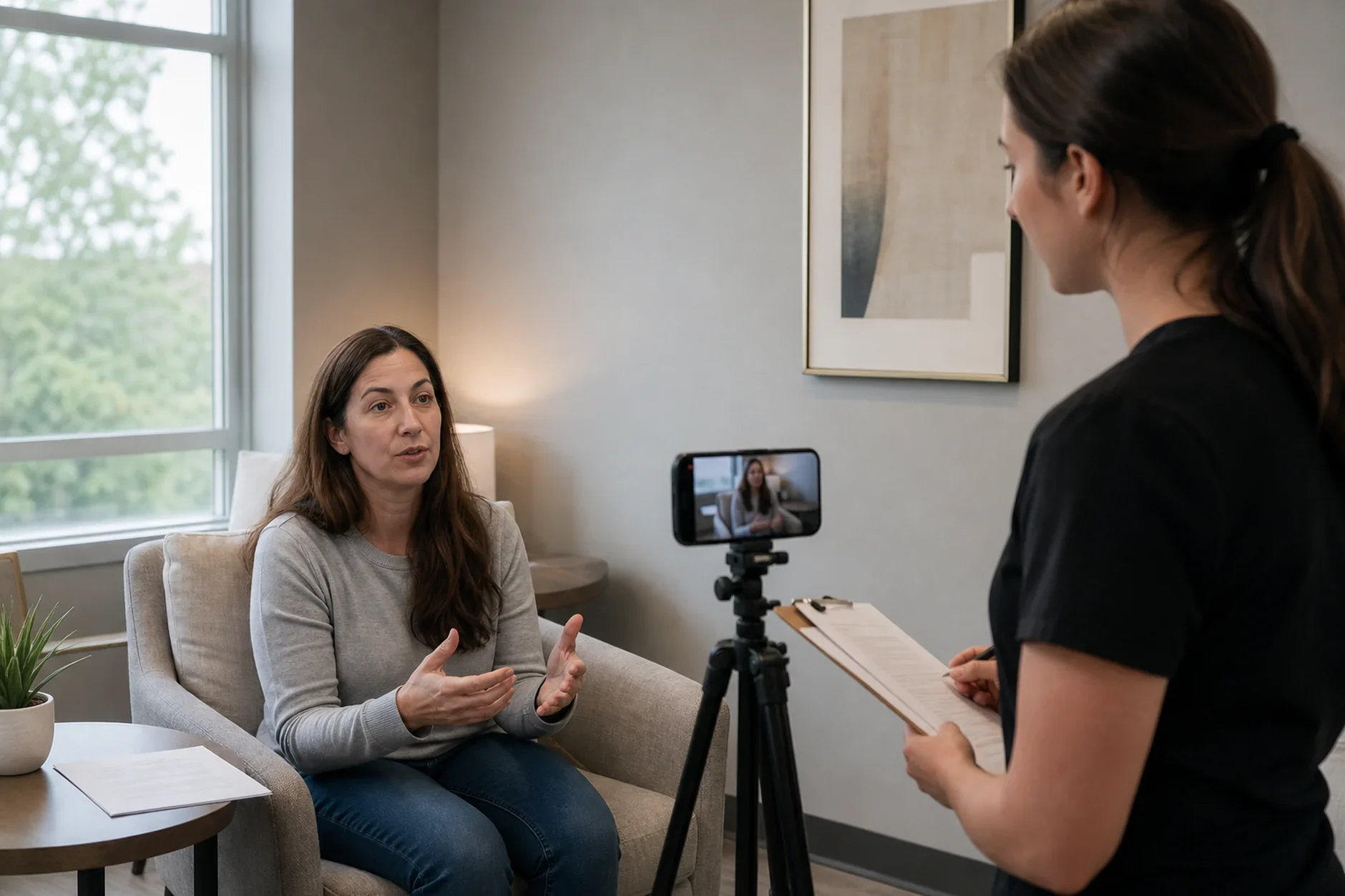
A clinic does not always need a film crew to capture a useful patient story. A trained staff member can record a real patient with a phone. The hard part is not the camera. It is making the choice free, keeping private data out of frame, and making sure the final post stays true.
This guide is a working model for approved clinic teams. Rules vary by place, provider, service, patient, data, and channel. The clinic’s legal, privacy, clinical, and marketing leads should approve the real process. This is not legal or medical advice.
First, Keep Care and Marketing Apart
Do not ask while a patient feels they must please the care team. Care, cost, booking, access, or a clinical choice must not depend on a yes. Give the patient time and a simple way to decline without a change in care.
Use a fair rule for who may be invited. Do not ask only people who are likely to praise the clinic if that would give a false view.
Do not offer a reward that depends on a positive story.
Use extra review for children, guardians, reduced capacity, sensitive care, active disputes, or at-risk groups.
Let the patient choose a full name, first name, initials, voice only, text only, or no story at all when those formats are approved.
Get the Right Consent Before the Camera Turns On
A casual yes on camera may not cover the use of health data, a face, a voice, a quote, or paid ads. Use the clinic’s approved written form first. For HIPAA covered groups, marketing use of protected health data will often need a valid written authorization unless an exception applies.
The form should name what will be used, who may use it, the purpose, channels, paid use, places, languages, term, edit rights, storage, vendors, and contact for withdrawal. It should explain what happens to work that has already been shared.
Permission for one story is not permission to clone a voice, make a digital patient, train a model, create new claims, or use the clip in a new campaign. Ask for each new use when needed.
Choose a Safe Place to Film
Use a planned room away from active care. Do not bring a media team into a treatment area before the needed written permission is in place. HHS warns that masking a face later does not undo a disclosure that already took place.
Remove charts, labels, wristbands, forms, medicine, screens, calendars, name boards, mail, photos, and room signs that may reveal private facts.
Keep other patients, visitors, staff, voices, alerts, reflections, and computer screens out of the shot and sound.
Put the drink on a safe table away from the phone or laptop. Keep the scene natural and free of staged desk diagrams.
Mark the room as in use so no one walks into the frame.
Use a Clinic-Owned Recording Kit
Use an approved clinic device when possible. Turn off personal cloud sync, message previews, voice tools, and apps that could copy the file. Follow the clinic’s rules for device locks, file transfer, access, storage, retention, and secure deletion.
Clean the lens and place the phone at eye level.
Use soft window light or one fixed light. Do not use beauty filters or effects that alter a clinical result.
Use a small microphone in a quiet room. Test ten seconds before the interview.
Record a simple background. Do not stage a fake exam or procedure.
Ask Open Questions, Not Scripted Claims
The staff member may guide the talk, but the words must remain the patient’s. Do not place a result or promise inside the question. Do not ask the patient to repeat a line written by the clinic.
What part of your experience would you like to share?
What did you wish you knew before your first visit?
How would you describe the way the team spoke with you?
What should we leave out of the final story?
Is there any answer you want to record again in your own words?
Stop if the patient shares more private detail than the approved use needs. Pause if they seem unsure. A shorter true story is more useful than a polished statement they did not mean.
Review the Full Message, Not Just the Quote
A real patient can make a claim the clinic cannot support. Review the quote, cut, headline, caption, image, music, before-and-after view, on-screen text, and booking prompt. Together they may imply a result, cause, speed, safety level, or common outcome.
A patient story is not clinical proof. Match each health claim to the right evidence or remove it. A small “results not typical” note may not cure a strong result promise. Read Patient Testimonials vs. Clinical Evidence for the two-track review.
Show the Final Cut to the Patient
When practical, show the final cut and caption before release. Let the patient correct a fact or decline the use. Keep proof of the version they approved. A new edit, claim, channel, language, or paid campaign may need a new check.
Add good captions and a text copy. Use plain alt text that does not repeat private health facts. Keep the patient’s story apart from the clinic’s own claims.
Store the Evidence and Plan for Removal
Keep the invite rule, signed form, source video, notes, claim proof, edits, approvals, final files, channels, dates, any reward, review date, complaints, fixes, and removal log. Limit access to the people who need it.
Give the patient one clear contact for questions or withdrawal. The effect of a request may depend on the form and the law. Follow the approved process, stop new use when required, and record what was removed or could not be recalled.
What TTGC Will and Will Not Do
TTGC can help a clinic plan the story format, shot guide, staff checklist, edit, captions, rights record, claim review path, channel map, and removal log. The clinic keeps the legal, privacy, and clinical decisions with its approved owners.
TTGC will not invent a patient, replace the patient with a synthetic actor, clone the patient’s voice, or turn the source story into a new performance. Read Why TTGC Does Not Create AI-Generated Patient Testimonials for the policy.
Staff Pre-Film Checklist
The invite was fair, free, and separate from care.
The right written consent and media rights are in place.
The room, device, account, and upload path pass the privacy check.
No other person or private fact can be seen, heard, or reflected.
Questions are open and do not feed praise or a result.
The patient knows how final review and withdrawal work.
Need a staff-ready patient-story workflow?
Book a free Brand and Tech Assessment to map the current problem, evidence, constraints, and practical next step.
Sources
- U.S. Department of Health and Human Services — Film and Media. https://www.hhs.gov/hipaa/for-professionals/faq/2023/film-and-media/index.html
- U.S. Department of Health and Human Services — Marketing under the HIPAA Privacy Rule. https://www.hhs.gov/hipaa/for-professionals/privacy/guidance/marketing/index.html
- U.S. Department of Health and Human Services — Collecting, Using, or Sharing Consumer Health Information. https://www.hhs.gov/hipaa/for-professionals/special-topics/hipaa-ftc-act/index.html
- Federal Trade Commission — Consumer Reviews and Testimonials Rule Questions and Answers. https://www.ftc.gov/business-guidance/resources/consumer-reviews-testimonials-rule-questions-answers
- Federal Trade Commission — Health Products Compliance Guidance. https://www.ftc.gov/business-guidance/resources/health-products-compliance-guidance
- W3C — Web Content Accessibility Guidelines 2.2. https://www.w3.org/TR/WCAG22/