Lead Generation Services: A Buyer's Guide
Define a good lead, compare channels and fees, protect consent and data, and measure sales quality before you buy lead generation.


Lead generation services should build a fair path to sales. The path starts with real demand. It ends with a clear, willing, and useful lead. A list of names is not the same as good leads.
Define a good lead with sales and service staff first. Name the group, need, place, role, time, fit, gaps, and consent. State when a lead is ready for sales.
Start With the Lead Definition
Name the buyer and the real problem the offer can help.
List which signs are needed, useful, or off limits.
State any limits tied to service, room, place, price, age, trade, or law.
When law and need allow, log consent, source, first reply, status, loss cause, and owner.
All teams must use the same lead rule. Do not reward raw count. First check that each lead fits, can be reached, has a fair source, and can be served.
Two Simple Lead Definition Examples
A B2B service team might define a sales-ready lead as a named decision maker at a firm it can serve, with a stated problem, a workable time frame, and permission for the agreed reply. A local service firm might require a person inside its service area, seeking a service it actually offers, with a reachable contact route and a clear request. These are templates, not universal rules. Add the limits that matter to the real offer.
Write the rule in one shared brief. Give examples of a fit, a poor fit, and a record that needs review. Then test the rule against sales and service results. The Qualified Leads Guide explains how to improve fit and routing.
What Lead Generation Services Can Include
Research on the market, buyer, need, and offer.
Search, posts, social, peer, event, email, ad, or sales work that fits the buyer and rules.
Pages, forms, call tools, chat, phone paths, access, privacy notes, consent, and clear next steps.
Lead scores, fit checks, clean-up, routing, reply time, follow-up, and CRM work.
Reports on source, cost, fit, calls, deals, sales, value, and loss. Each report must state its limits.
Compare the Main Provider Types
Channel or Performance Agency
This firm runs search, social, content, email, pages, or a mix. It may charge a project fee, retainer, share of ad spend, or performance fee. It fits a buyer that needs channel work and has a clear offer, sales path, and data owner. Check whether media, tools, pages, creative work, and CRM work are inside the fee.
Lead Marketplace or Aggregator
This provider sells records or calls gathered from its own sources. The fee often starts when a lead, call, or accepted record arrives. It can test demand fast, but source, consent, exclusivity, repeat sales, and rejection rules need close review. The buyer may have less control over the first message.
Appointment-Setting Team
This team researches, contacts, qualifies, and books meetings. It may charge for time, a monthly scope, a meeting, or a mix. It fits considered sales when the target account, role, message, reply path, and meeting rule are clear. A booked meeting is not the same as a qualified sales chance.
Data or List Provider
This provider supplies contact or company data. It does not create demand or grant permission to use every channel. Check source, age, accuracy, allowed use, suppression, deletion, export, and local law. The buyer still owns the offer, contact plan, consent checks, and sales result.
Match the Program to the Business
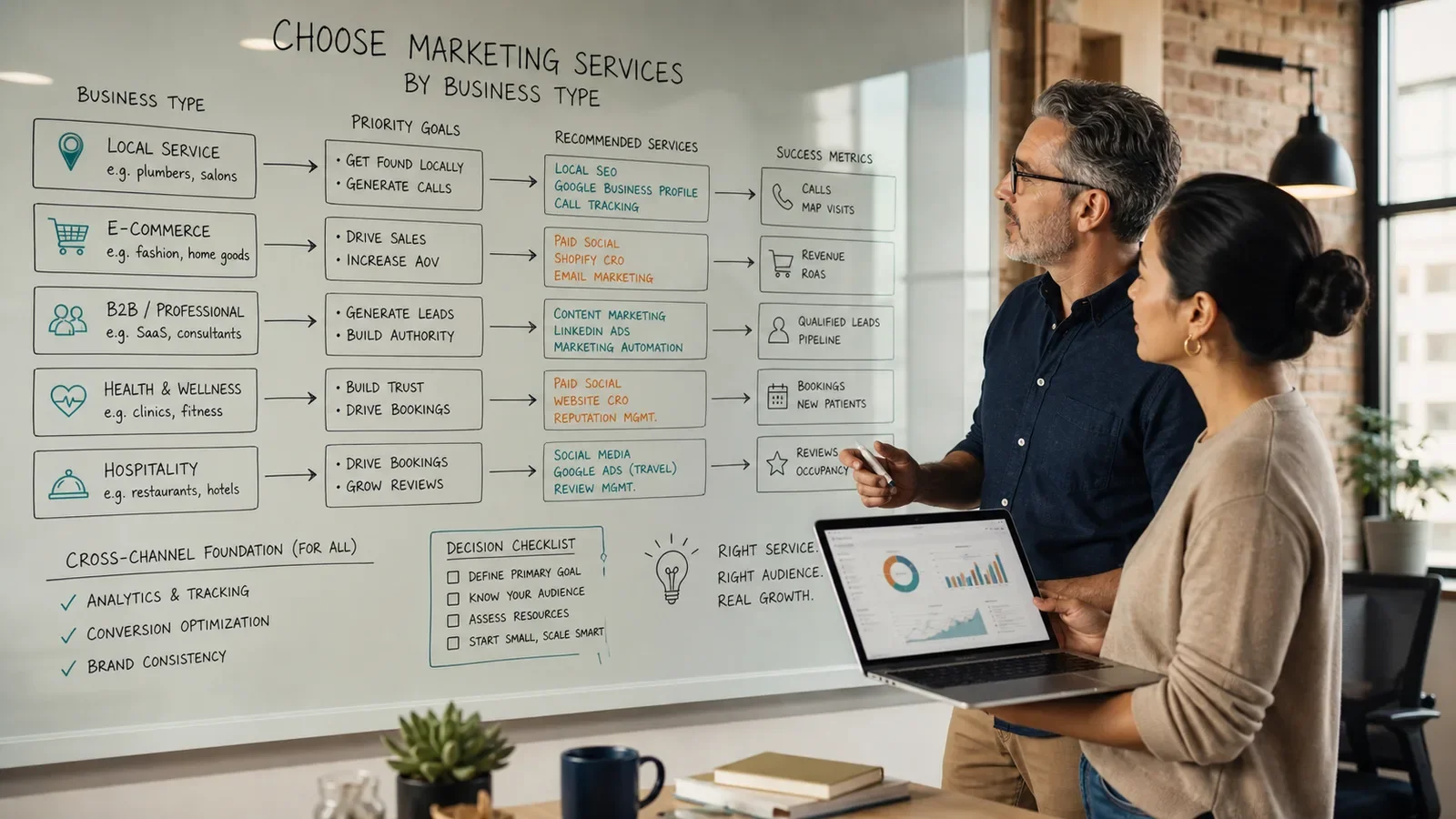
Advisers may need a short fit check before a few calls. SaaS firms may need product help and clear sales paths. Startups need a small test before they buy scale. Large firms need firm routing, rules, owners, and a clean CRM first.
Health, finance, law, and real estate work needs skilled review. Check claims, target groups, contact, intake, consent, files, and local rules. A lead firm must work within those checks. It cannot replace expert advice.
Compare Provider and Pricing Models
A firm may charge by task, month, ad spend, lead, call, or mix. Focus on what the fee rewards. Define what counts and what the fee covers. Name who owns the data. Set rules for bad leads and shifts in sales room.
Ask if ads, tools, data, art, pages, CRM work, calls, and tax cost more.
Ask who owns each ad account, site, page, group, file, log, rule, and source.
Set rules for repeat names, spam, wrong places, false data, past buyers, poor fit, and dead leads.
Set a spend cap, test span, check dates, team limit, pause rule, and exit path.
Provider and Contract Red Flags
The firm will not name its lead sources, consent records, exclusions, or checks.
The contract rewards raw volume but leaves a qualified lead undefined.
The buyer cannot retain its accounts, data, pages, creative files, or clear export rights.
There is no written process for disputes, repeats, invalid records, pauses, complaints, or exit.
The firm promises sales or gives a price before it understands the offer, market, channels, rules, and sales capacity.
Published price ranges rarely compare like work. A quote may include media, tools, pages, calls, data, or none of them. Compare the full scope, fee trigger, test period, ownership, and downside. Ask what changes the fee and what the buyer pays when a lead is rejected.
Protect Consent, Privacy, and Trust
Ask only for data you need. Tell people what comes next. Do not hide consent in long terms. Check the source and allowed use of bought data. One record does not grant a right to use each channel for all time.
Email, calls, texts, forms, cookies, and bought data can have different duties. In the United States, CAN-SPAM addresses commercial email, while the TCPA and FCC rules can affect certain calls and texts. Privacy duties can also change by state, country, data type, and audience. This is a planning flag, not legal advice. Get skilled advice for the actual places, channels, tools, and records in use.
The FCC's 2023 order FCC 23-107 included a one-to-one consent rule for certain telemarketing robocalls and robotexts. In January 2025, the U.S. Court of Appeals for the Eleventh Circuit vacated that part of the order. The wider consent and contact rules did not disappear. Check the current law and local requirements before a campaign. Name the data owner and consent rule. Also set rules for access, storage, erasure, safety, opt-outs, complaints, and harm.
Outside the United States, do not copy one consent model into every market. In the United Kingdom, data protection law and PECR can both affect direct marketing. Canada's CASL sets rules for many commercial electronic messages, while PIPEDA can govern personal data in commercial activity. European and other markets have their own privacy and electronic-marketing rules. Map every target place and channel, use current regulator guidance, and obtain local advice before launch.
Measure Quality Through the Whole Path
Track cost and count, but go on. Check valid leads, good fits, reply time, calls, deals, sales, value, refunds, loss causes, team room, and source. Compare like time spans. Log gaps in the data.
A source score is an estimate. It does not own the sale. A buyer may see search, posts, peers, email, ads, and sales staff first. Use the same lead rules for each firm.
Frequently Asked Questions
What are the best lead generation services?
The best service fits the buyer, offer, channel rules, sales room, data care, and lead rule. A small set of willing leads that fit is worth more than a large vague list.
Should a company pay per lead?
Pay per lead can work with clear lead and source rules. Set checks for repeats, claims, team room, data, and who owns what. The model can reward poor work when it pays for count but not fit.
Can a lead generation company guarantee sales?
No sound firm can promise sales from leads alone. Fit, price, reply, sales skill, rivals, time, service, and care all play a part. A firm can state the work it controls and the limits of each test.
For an in-house plan, use How to Improve Lead Generation. For quality issues, read How to Fix Bad Lead Quality.
Need a clearer lead brief and lead rule?
Book a free Brand and Tech Assessment to map the current problem, evidence, constraints, and practical next step.
Sources
- NIST: Privacy Framework. https://www.nist.gov/privacy-framework
- U.S. Federal Trade Commission: CAN-SPAM Act: A Compliance Guide for Business. https://www.ftc.gov/business-guidance/resources/can-spam-act-compliance-guide-business
- U.S. Federal Communications Commission: Second Report and Order FCC 23-107. https://docs.fcc.gov/public/attachments/FCC-23-107A1.pdf
- U.S. Court of Appeals for the Eleventh Circuit: Insurance Marketing Coalition Limited v. FCC, No. 24-10277, opinion filed January 24, 2025. https://media.ca11.uscourts.gov/opinions/pub/files/202410277.pdf
- UK Information Commissioner's Office: Direct marketing guidance. https://ico.org.uk/for-organisations/direct-marketing-and-privacy-and-electronic-communications/direct-marketing-guidance/
- Canadian Radio-television and Telecommunications Commission: Canada's Anti-Spam Legislation, regulations, and guidance. https://crtc.gc.ca/eng/internet/anti/reg.htm
- Office of the Privacy Commissioner of Canada: PIPEDA requirements and guidance. https://www.priv.gc.ca/en/privacy-topics/privacy-laws-in-canada/the-personal-information-protection-and-electronic-documents-act-pipeda/
- U.S. Small Business Administration: Break-Even Point. https://www.sba.gov/business-guide/plan-your-business/calculate-your-startup-costs/break-even-point