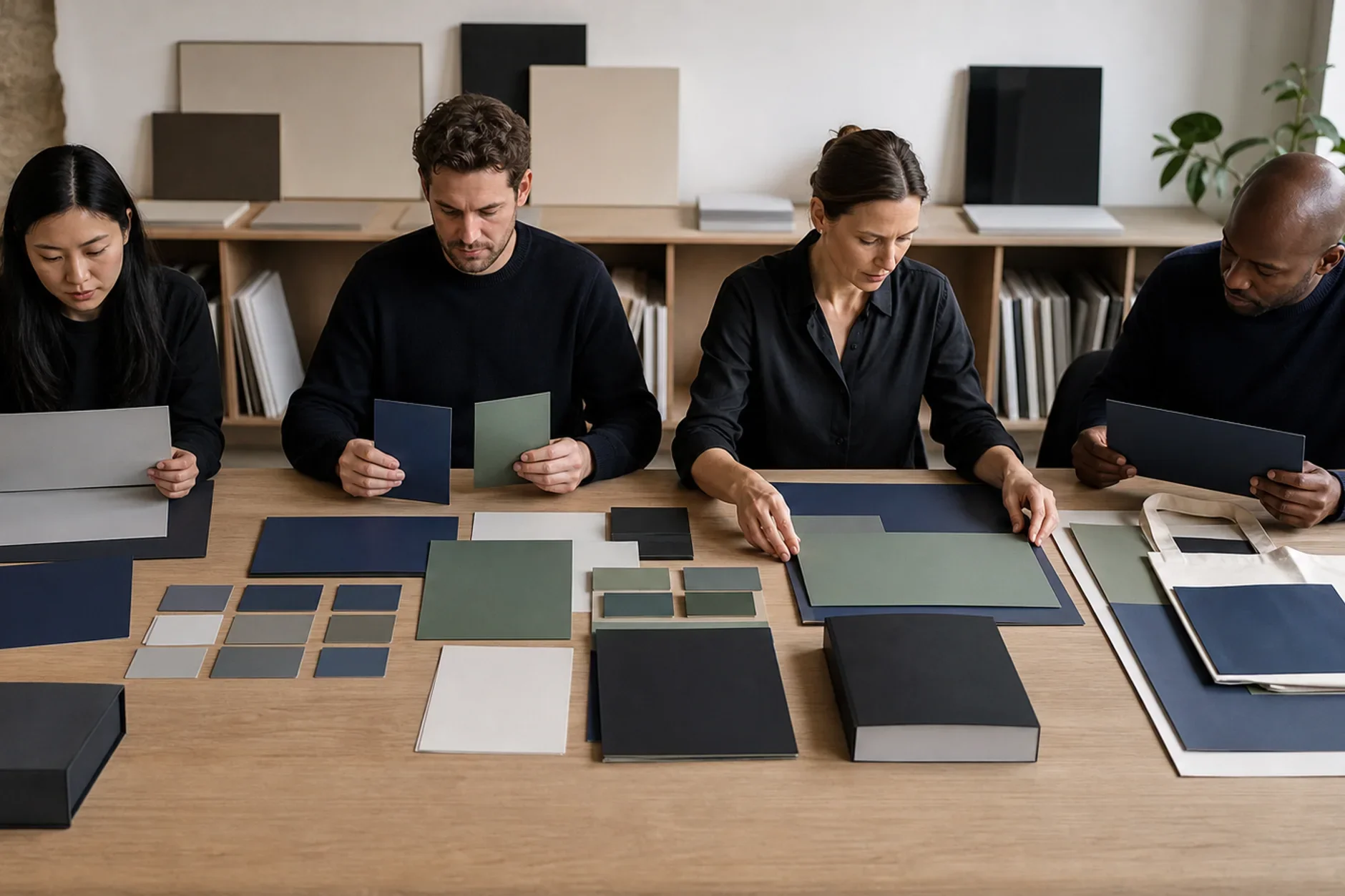
Medical Spa Branding: Why Your Spa Looks Like Every Other Medical Spa in Your Market (And What to Do About It)
The medical spa market has the most visually homogeneous branding of any healthcare category. That makes standing out easier than it looks. If you know what to do.


Openthe websites of the medical spas in your city and study the medical spa branding. Almost every time, you will notice the same familiar things, like clockwork. Beige or blush backgrounds sit behind script or serif logos. Soft lifestyle photos feature women who look thrilled to wear a bathrobe. The service menu reads just like the one at every competing spa. And there it is again: the phrase “look and feel your best.”
The medical spa market has the most look-alike branding of any healthcare category. Every practice tries to say the same things. They all sell luxury. They all sell femininity. They all promise results. And they all lean on the same visual language. So not one of them stands out. Patients then choose almost only on price and convenience. And that puts steady pressure on their margins.
Here is the surprising upside. This sameness makes it easier to stand out in medical spas than in almost any other healthcare category. The bar to stand out is not high. You just need the will to make a clear positioning choice.
The Three Positioning Gaps in the Medical Spa Market
Gap 1: Clinical Authority vs. Luxury Retreat
Most medical spas sit on the luxury-retreat side. They feel soft, warm, and full of comfort. In most markets, the clinical authority side is nearly empty. That side puts results first. It is medically rigorous and science-backed. Picture a medical spa that brands as a clinical results center. A doctor guides the care. There is full physician oversight. It shows before-and-after cases. And it shares its own specific outcome data. That practice draws in a very different patient. This patient is worth more. And this patient stays more loyal. Best of all, this patient cares far less about price.
Gap 2: Gender-Neutral or Male-Specific
The male aesthetic medicine market is growing fast. It grows by about 15-20% each year. Yet almost no medical spas are built for male patients. A practice can make a clear choice to serve men. Or it can build a truly gender-neutral space, not a coded feminine one. Either choice opens a market segment with little competition.
Gap 3: Age-Specific Premium Positioning
Look at patients who are 55 and older. For this group, one thing stands out. Anti-aging treatments bring in the highest average transaction value. And that holds true across all of aesthetic medicine. This patient is here for clinical credibility. And they want to know there is medical supervision. On top of that, they want to see proven results. They do not want the same branding as a 30-year-old. That younger patient is just there for preventative Botox. So go and build a practice for the refined, results-focused 55+ patient. A practice like that can go on to charge strong premiums. And it will face very little direct competition.
What Differentiated Medical Spa Branding Looks Like
Differentiated medical spa branding is not about looking prettier or more luxurious. It comes down to one clear, defensible positioning choice. Then you carry it out. You back it with steady visuals. You give it a steady feel. That means you have to pick just one lane. It could be clinical authority. It could be gender-neutral. It could be age-specific. It could even be one specialty procedure. Then you build the whole brand so that it owns that one spot.
In a market where every practice looks the same, any clear visual and positioning choice stands out at once. The bar to stand out in medical spas is genuinely low. The only thing you need is the courage to choose.
Book a Growth Assessment to find your medical spa’s differentiation opportunity
Book a free Brand and Tech Assessment. See how a strong production engine can power your growth.
Why Through The Glass Creatives
Knowing the strategy is the easy part. But executing it is where most teams stall. You have to do it at a high level. It has to truly move your business. That is the work of Through The Glass Creatives. TTGC is a premium brand, growth, and AI/development studio. It is led by just two people. Mherie Vic Palomo-Prevendido runs growth and SEO strategy. Ravve Jay Prevendido runs creative direction and AI/dev engineering. Few teams pair elite brand thinking with hands-on technical execution. That is why TTGC can deliver work like this. And it does it the right way. Book a free Brand and Growth Assessment to see how.