SEO for HVAC Companies: A Practical Local Guide
Build useful pages from real services, current local facts, exact technician scope, safe education, private requests, clear estimates, and capacity.

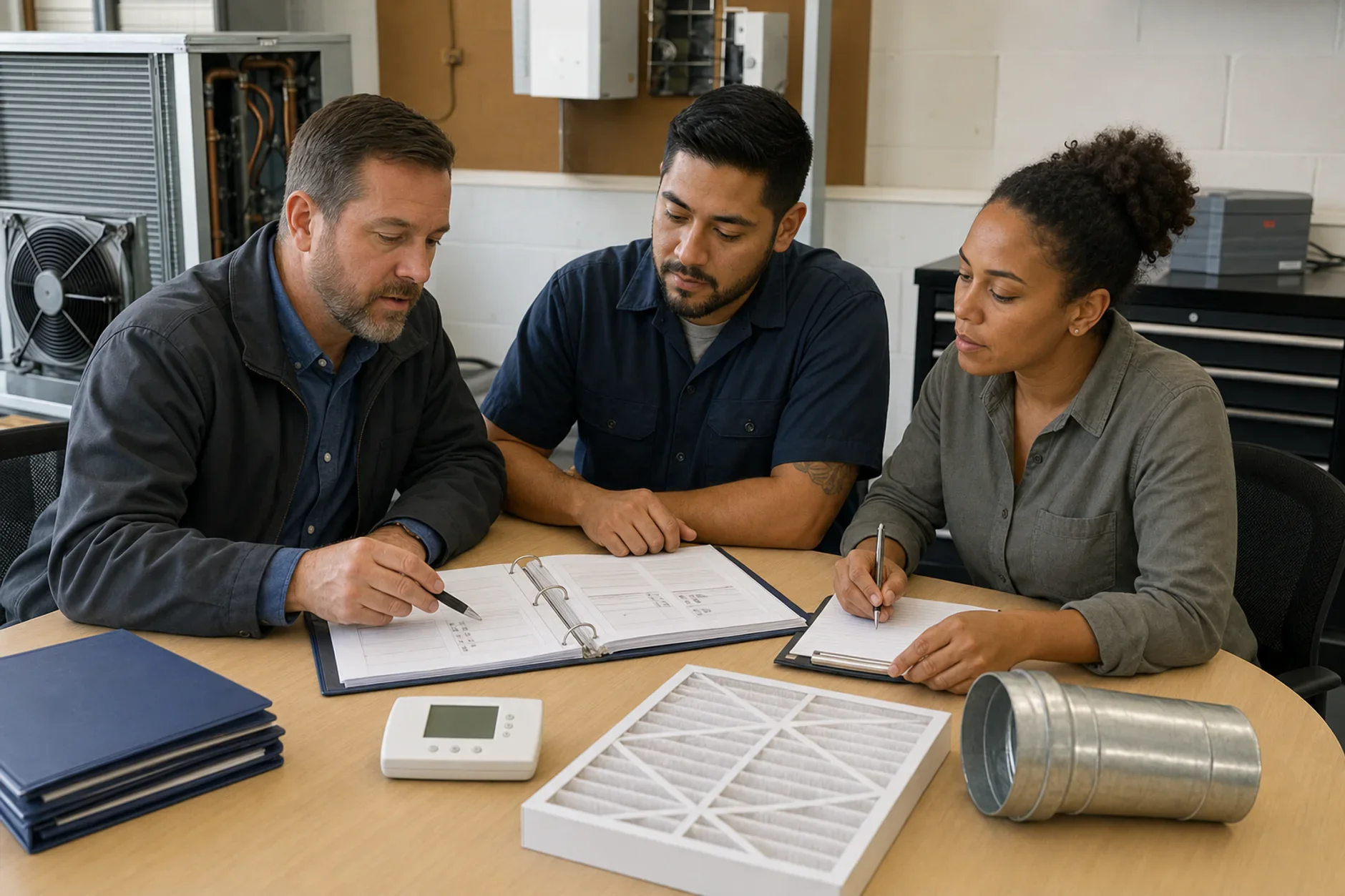
Good HVAC SEO helps a reader grasp the work, then points to a safe next step. Name the real service, the system type, the staff facts, the service area, and the season. Then add price factors, the urgent route, and how much work you can take on. Rank cannot promise a call, a booking, a repair, or comfort, and it cannot promise savings, revenue, or return.
Start with the business and its records as they stand now. Check the legal name, the staffed site, the service area, the hours, the service, and the system type. Check the license, the technician credential, the insurance facts, the price terms, the urgent route, and open slots. Give each key fact an owner, a source, and a date to check it again.
Map Service, System, Safety, and Timing Tasks
Learn: explain the system and the service. Cover broad signs, limits, safety notes, and choices.
Check fit: name the property types and the equipment scope. Add the service areas, the staff facts, and what you do not cover.
Request service: explain the first check and the visit steps. Add estimate terms, access, parts, changes, and what can shift the timing.
Urgent help: give clear danger and after-hours routes. Do not diagnose a system online.
Do not assume each visitor has an emergency. Many are not ready to buy. A renter, owner, manager, or builder may just be learning or planning. Do not use fear to push a call. That means fear about heat, cold, health, children, property damage, or cost.
Build Pages From Work You Really Offer
Build a page when a service or system has its own task and real proof to show. Name the equipment scope, the property type, the service area, the staff role, the visit steps, and the safety limits. Add price factors and the next step, then merge pages that repeat one answer.
Do not spin up a page for each city, brand, fault, or season by swapping a few words. Do not list a service area, system, license, credential, tool, part, brand tie, or open slot that the business cannot back up. Mark examples as examples.
Keep Local, Seasonal, and Availability Facts Current
Use the real business name and only true types. Keep each profile you qualify for up to date, along with the staffed site, service area, phone, hours, holiday note, and owner list. Do not stuff search terms into the name, and do not set up a fake office in each city.
Weather and demand shift by place and by year. Do not publish fixed peak months, posting windows, rank dates, call counts, or booked-work claims as rules. Say when hours, response, service scope, staff, parts, or open slots changed. A profile cannot promise dispatch or arrival.
Explain Safety Without Remote Diagnosis
Keep public advice broad. Never tell an untrained reader to open equipment or touch wires. Do not tell them to bypass a control, handle refrigerant, or enter a confined space. Do not tell them to climb, or to work near fuel, flame, moving parts, heat, cold, water, or poor air.
Give clear routes for fire, gas odor, smoke, and sparks. Do the same for carbon monoxide alarms. Do the same for harsh heat, cold, or any other direct danger. An emergency service, utility, property owner, or skilled trade may need to act first. A page or photo cannot clear a hazard.
Keep License and Refrigerant Claims in Scope
Check each business and trade license. Check each staff role, certificate, permit role, insurance fact, and service area. Name the holder, the issuer, the scope, the place, the status, and the date. One badge or license does not prove fit or safety. It does not prove code work, arrival, repair, or output.
EPA says some work that may release refrigerant needs the right Section 608 staff certificate. The type turns on the equipment. State only the proof you hold now, and its scope. It does not prove every install, each check, or each repair, and it does not prove a fluid choice or a local license.
Write Equipment, Energy, and Health Claims Carefully
Check each claim about efficiency, size, life, noise, comfort, air quality, mold, allergy, and health. Do the same for rebate, tax, code, warranty, and savings claims. Name the exact product, the test, and the home or climate you assume. Add the source, the date, and the limits when needed. Do not diagnose a person, home, or system online.
DOE offers broad heating and cooling facts. A real result can vary with the building, weather, load, ducts, and controls. The install, use, rates, upkeep, and gear may matter too. Do not turn an estimate, rating, or tool into a promise about a bill or comfort. It cannot promise air, life, or payback either.
Make Estimates, Visits, and Terms Clear
Ask for the broad problem, the system type, the property type, and the place as needed. Add access, known hazards, photos, past work, timing, and a way to reach you. Keep gate codes, tenant facts, IDs, and payment data out of public tools. Guard security details and private files too.
Say that a form or call starts the first check. It is not a diagnosis, a booking, or a dispatch. It is not a promise to arrive. It does not promise an estimate, price, part, or permit. It does not promise a repair, warranty, comfort, or savings. Explain visit fees and the limits of an estimate. Add parts, changes, approvals, deposits, and cancellation. Say who may accept terms.
Use Reviews and Work Photos Fairly
Ask real clients for honest reviews. Do not buy praise or block criticism. Do not script a service, technician, town, price, or speed. Do not script a safety, energy, air, comfort, savings, or result claim. A public reply must not expose a person, address, or schedule. It must not expose a system, payment, complaint, or dispute.
Use property, equipment, worker, vehicle, logo, and job media only with clear rights. Hide addresses, plates, and access points. Hide control settings and serial numbers. Hide papers and screens. Guard private property details too. Do not show unsafe work, and do not pass stock media off as a real job.
Measure Fit, Service, and Capacity
Track correct service facts and valid pages. Track useful searches, safe requests, and visits that fit. Track estimates, bookings, finished work, and declines. Add complaints, fixes, and open slots when the law allows. Define each count, source, time span, limit, and owner.
Compare like periods. Note weather, staff, hours, service mix, and prices. Note ads, referrals, parts, call handling, and open slots. A rank, click, call, or visit cannot prove that SEO caused a repair or comfort. Nor can an estimate, a booking, or a short test. None of it can prove savings, revenue, margin, or return.
Want another urgent home service workflow? Read the plumber SEO guide.
A Fast Release Check
Are the services, systems, areas, and hours current? Check licenses, staff facts, and safety notes. Check product claims, prices, urgent routes, and open slots. Are media rights and private forms ready? If not, hold the page.
The Practical Rule
Build HVAC SEO from real work and real place. Use exact staff facts and safe teaching. Keep equipment claims narrow and keep requests private. Make estimate terms clear, keep proof fair, and state true open slots. Do not promise rank, calls, bookings, repairs, comfort, savings, revenue, or return.
This is broad marketing help. It is not HVAC, electrical, gas, or refrigerant advice. It is not health, safety, or energy advice. It is not permit, insurance, contract, or legal advice. We checked the cited EPA, OSHA, DOE, FTC, and Google pages on 16 July 2026. Rules and service facts can change. Use current local sources and skilled review.
Need a safer HVAC search plan?
TTGC can check service and location pages, staff facts, safety limits, equipment claims, private requests, estimate terms, reviews, measurement, and capacity. HVAC, electrical, gas, refrigerant, health, safety, energy, permit, insurance, contract, and legal choices stay with skilled owners. Rankings, calls, bookings, repairs, comfort, savings, revenue, and return are not promised.
Sources
- Google Search Central: Creating helpful, reliable, people-first content. Checked 16 July 2026. https://developers.google.com/search/docs/fundamentals/creating-helpful-content
- Google Business Profile rules. Use a real name and valid site. Keep hours, categories, owners, and key facts true. Checked 16 July 2026. https://support.google.com/business/answer/3038177?hl=en
- Federal Trade Commission: Endorsements, Influencers, and Reviews. Reviews must be honest and key ties must be clear. Checked 16 July 2026. https://www.ftc.gov/business-guidance/advertising-marketing/endorsements-influencers-reviews
- U.S. EPA: Section 608 Technician Certification. It explains certification for work that may release covered refrigerants and the equipment-specific types. Checked 16 July 2026. https://www.epa.gov/section608/section-608-technician-certification
- U.S. OSHA: Heat controls, work practices, and protective equipment. It covers plans, rest, water, training, and emergency steps. Checked 16 July 2026. https://www.osha.gov/heat-exposure/controls
- U.S. Department of Energy: Heating and Cooling. It provides broad education on HVAC and related technologies; exact results depend on the building and system. Checked 16 July 2026. https://www.energy.gov/topics/heating-cooling
Want hands-on help with this? Explore our SEO service.