What Is a Lead Magnet?
Learn how a lead magnet exchanges useful material for a clear action, and how value, consent, data, access, delivery, privacy, and follow-up should work.

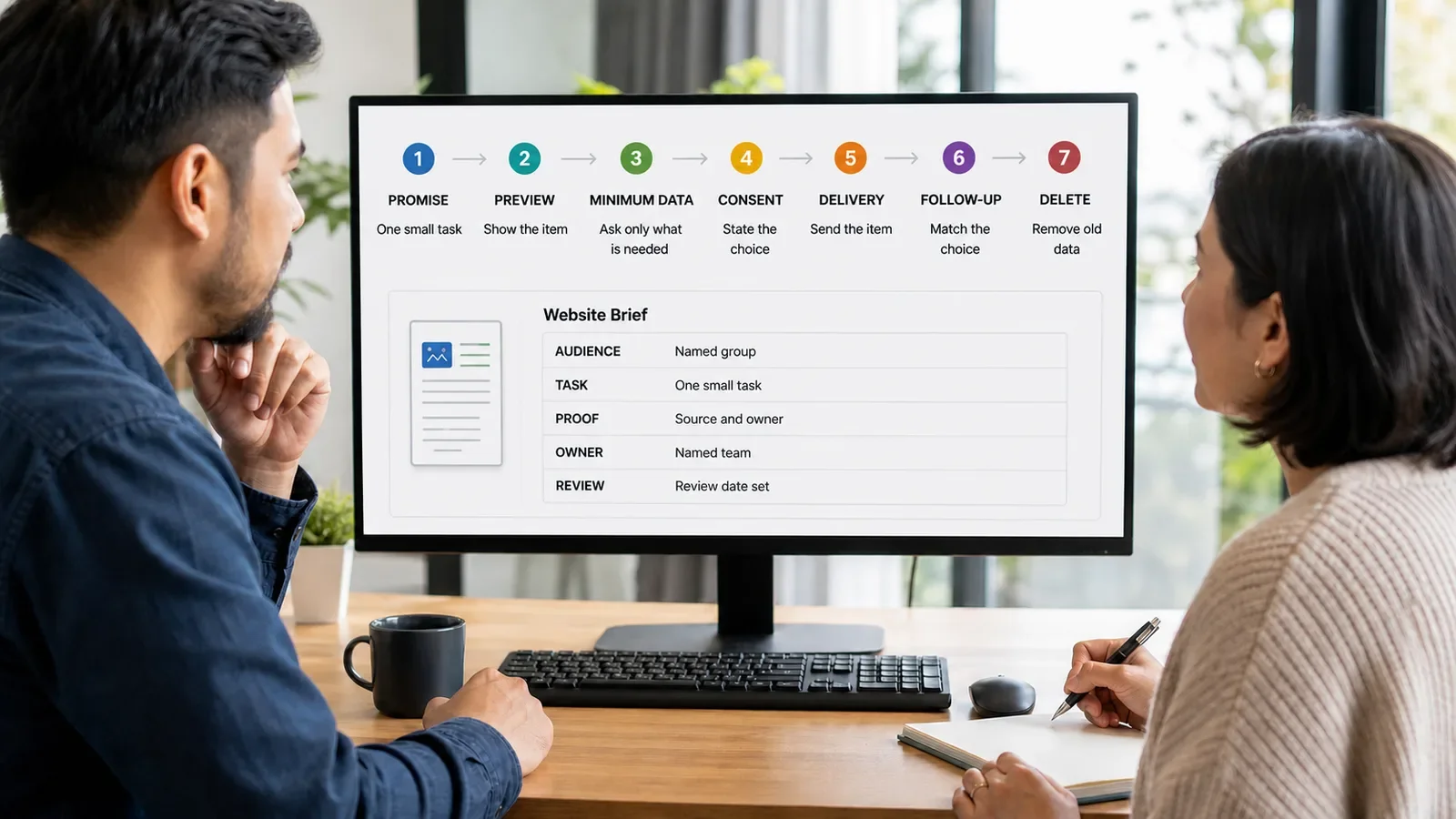
A lead magnet is a useful offer tied to a clear action. The action often involves an email address, signup, or contact form.
It may be a guide, worksheet, tool, template, sample, trial, class, or check. The person should know what they will get, what data the form asks for, and what may happen next.
The exchange does not grant open-ended permission. Access may be one choice. Marketing consent and later sales contact may be other choices under the rules that apply.
What Job Should a Lead Magnet Do?
A good lead magnet helps with one real task before a sales talk begins.
It may help someone plan, compare, check, calculate, decide, or prepare. The scope should be narrow enough to use and useful enough to keep.
Do not promise that one file will solve a whole business problem. A clear small win earns more trust than a broad claim the item cannot support.
Start With a Real Need
Use research, support questions, sales calls, on-site search, or direct feedback to find a repeated task.
Ask what someone needs before they can take the next sound step. Then decide whether a new resource is the best answer. A useful page, calculator, or current guide may already exist.
Do not build a lead magnet only because a format is popular. A checklist with no real use is still weak content.
Make the Exchange Clear
The landing page should name:
what the person will receive;
who the item is for;
the task it helps with;
the format and size;
how and when it will arrive;
the data the form asks for;
any follow-up the person should expect.
Show a truthful preview when you can. A page image, sample row, contents list, or short demo can help someone judge the offer before sharing data.
Ask for Only the Data You Need
Each field should have a purpose.
An email file may need an email address. It may not need a phone number, job title, revenue range, and home address at the same time.
More fields can add friction and more data creates more work and risk. Record why each field exists, who can use it, and when it should be removed.
Keep Access and Marketing Choices Distinct
Sending the requested item and sending later ads are not always the same purpose.
Tell people whether they are joining a mailing list. Make any required choice clear, and explain how to change or stop it. Do not hide unrelated marketing inside the download language.
Rules differ by place, audience, message type, and data. For example, the UK ICO direct-marketing guide and the U.S. FTC CAN-SPAM guide set different duties and scope. Use the current rules for the people you serve. Have the right privacy or legal owner review the flow. This article is not legal advice.
Build Reliable Delivery
Send the promised item at the stated time. Test the full path before launch.
Submit the form with a real test address. Check the page message, inbox delivery, sender name, subject line, file name, link, and mobile view. Test errors and a second request too.
Give the person a way to get help if the item does not arrive. A broken path breaks trust.
Make the Resource Easy to Use
Check the file or tool on a small screen and at higher zoom. Use clear headings, labels, and link text. Make sure keyboard and common assistive-tool users can reach and use it.
Offer a web version when a fixed file creates a barrier and the task allows it. State the file type and size before download.
Review image rights, claims, sources, and dates. A polished old guide can still give bad advice.
A Simple Lead Magnet Example
Picture a design studio with a one-page website brief.
The landing page shows the first section and lists the fields inside: audience, task, proof, pages, owner, and approval. It says the PDF will arrive by email after the form is sent.
The form asks only for a name and email address. A separate empty box explains the studio newsletter. The download does not silently add the person to unrelated mail.
The delivery email links to the PDF and a web version. A short note explains how to unsubscribe from the newsletter without losing access to the brief.
Plan the Follow-Up Before Launch
The next message should match the item and the person's choice.
A website brief may lead to a short email about gathering page evidence. It should not trigger an unrelated sales sequence with no warning.
Write the delivery email, any follow-up, sender, timing, and stop rule before the form goes live. Make sure a person can opt out through the route the applicable rules require.
How Should a Lead Magnet Be Measured?
Track whether the exchange works, not only how many names enter a list.
Check form errors, failed sends, file access, and help requests. You may also need to track opt-outs, complaints, and the quality of later talks. Use data only where access, privacy, and retention rules allow.
A download does not prove purchase intent. A large list can still be a poor fit.
Lead Magnet vs. Content Upgrade
A lead magnet is any resource or benefit used to support a contact action.
A content upgrade is tied to a specific page. It may extend the page with a worksheet, template, or tool for the task the reader is already doing.
The terms overlap. Define the item and exchange instead of relying on the label.
Gated vs. Ungated Resources
A gated resource asks for information before access. An ungated resource is open without that exchange.
Gating is a product and business choice. It does not prove the item is more valuable. Compare the need for contact data with reach, trust, privacy, access, and upkeep.
Common Lead Magnet Mistakes
Offering a sales brochure under a useful name.
Asking for data with no clear need.
Hiding marketing consent inside the download step.
Sending the item late or through a broken link.
Ignoring phones and assistive tools.
Using claims or sources that have gone stale.
Calling every download a qualified lead.
Keeping data longer than the stated need.
Frequently Asked Questions
Do Lead Magnets Still Work?
They can support a fair and useful exchange when the need, item, audience, access, and follow-up fit. No format can ensure signups, leads, or sales.
Should a Lead Magnet Be Free?
Many have no price, but the person may still exchange data, time, or attention. State the full exchange clearly instead of treating “free” as the whole story.
What Is the Best Lead Magnet?
The best fit is the smallest resource that helps a real audience with a clear task and leads to an honest next step.
Use How to Build an Email List for the wider opt-in system and How to Segment Your Email List for relevant follow-up.
Need a useful opt-in exchange with a clear data and consent path?
Use the Brand and Tech Assessment to map the need, promise, form, delivery, choices, follow-up, and upkeep.
Sources
- UK Information Commissioner's Office: Plan direct marketing (checked November 19, 2026). https://ico.org.uk/for-organisations/direct-marketing-and-privacy-and-electronic-communications/direct-marketing-guidance/plan-direct-marketing/
- U.S. Federal Trade Commission: CAN-SPAM compliance guide for business (checked November 19, 2026). https://www.ftc.gov/business-guidance/resources/can-spam-act-compliance-guide-business