What Is a Meta Title?
Learn what a page title is, where it appears, how search engines may use it, and how to write one that fits the page.

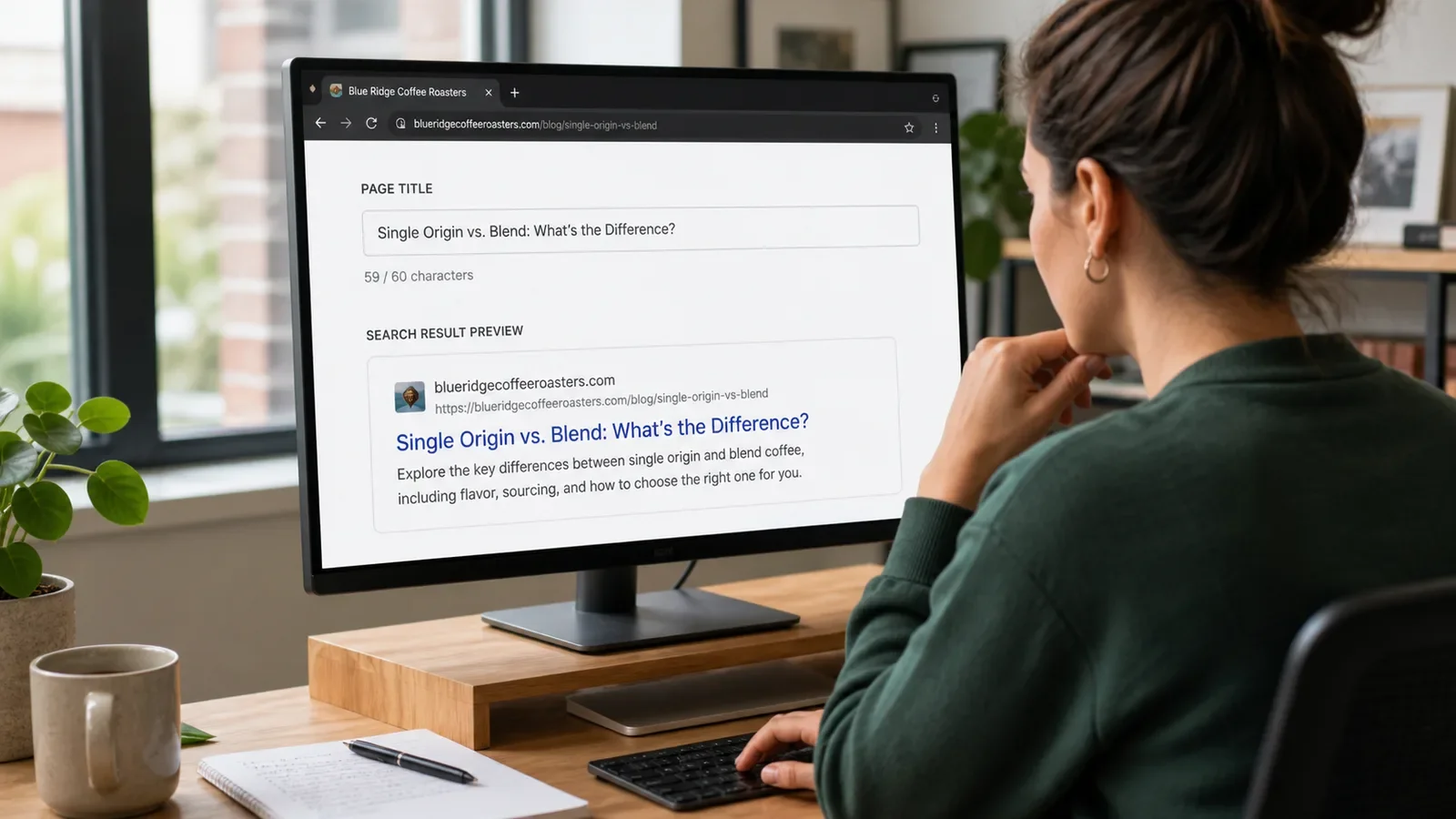
A meta title is the text placed in the HTML title element of a web page. People also call it a title tag or page title. It can appear in a browser tab, bookmarks, social tools, and search systems.
Google may use this text as the title link in a search result. It may also choose other text when another source describes the page better. The HTML title is a strong hint, not a command that fixes the final search result.
Put It in Plain Words
Think of the title as the short label on a page. It should tell a person what the page is about before they open it. A useful title is clear even when it appears by itself.
Each useful page needs its own title. If every page says “Services,” people and search systems cannot tell the pages apart. “Brand Strategy Services for Growing Teams” gives more context.
The title should match the main heading and the real page. The words do not need to be identical. They do need to point to the same topic and purpose.
Put the main idea near the start when it reads well. Add the brand name only when it helps. Do not force a list of similar keywords into the title.
A title can be cut short on some screens. There is no fixed character limit that works in every result. Write a concise title, then check how it reads on a phone and a computer.
Search results can change after a page is crawled again. A title edit may take time to appear. Google may still show a different title link based on the page, headings, links, or other signals.
How Does Meta Title Work?
A developer or content system adds one title element inside the page head. A browser reads it for the tab label. Search crawlers can read it with the page content and other metadata.
Google says it can create a title link from the title element, the main visual title, headings, prominent text, Open Graph text, page text, anchor text, and links from other pages. Clear agreement across these sources makes the page easier to understand.
Why Is It Important?
A good title helps a person judge relevance before clicking. It also gives browsers, assistive tools, search systems, and sharing tools a useful label for the page.
A title cannot make a weak page rank first. It works with the content, links, site quality, search intent, and many other signals. Its value is clarity, not a guaranteed position.
Where Is It Used?
Browser tabs, bookmarks, history lists, saved reading tools, and some accessibility workflows.
Search results, when the search engine decides the title is a useful source.
Social and messaging previews when a platform falls back to the page title.
Site audits, content inventories, analytics reports, and editorial workflows.
A Simple Meta Title Example
A page about choosing brand colors should not use “Branding | Company.” A clearer title could be “How to Choose a Brand Color Palette | TTGC.” It names the task and the subject in plain words.
The page itself must then explain how to choose a palette. If the page only sells a logo package, the title creates a poor match. Change the page or change the title.
What Makes a Useful Meta Title?
A specific topic or task that matches the page.
Words the intended reader can understand without extra context.
A clear difference from other page titles on the same site.
Concise brand text when the brand name helps recognition.
Natural language without repeated keywords, claims, or clickbait.
How Do You Write and Check One?
Read the page and state its main purpose in one short sentence.
Choose one primary topic. Do not make one page answer several unrelated intents.
Write a concise title that puts the useful topic before filler words.
Compare it with the main heading, page copy, URL, and search intent.
Check for duplicates across the site and review the live HTML after release.
Use Search Console and real search results to watch for title rewrites and weak clicks.
Meta Title vs. H1 Heading
The meta title sits in the HTML head and labels the page for browsers and other systems. The H1 is the main visible heading in the page body. They can use different wording, but they should describe the same page.
A social title is another field. Platforms may use Open Graph or card metadata for a shared link. Keep all three aligned so the preview does not promise a different topic.
Common Mistakes
Using the same title on many pages.
Stuffing the title with repeated keywords or locations.
Writing a claim the page does not support.
Using vague labels such as Home, Page, Article, or Services.
Changing titles without checking the live HTML and canonical page.
Frequently Asked Questions
Is a meta title a Google ranking factor?
The title element helps Google understand and present a page, but no single title guarantees a rank. Relevance, page quality, links, intent, and many other systems also matter.
How long should a meta title be?
Use enough text to name the page clearly and keep it concise. Search displays vary by device and query, so treat length tools as previews rather than fixed rules.
Why did Google change my title?
Google may create a title link from several page and link sources. Check whether the title is vague, repetitive, outdated, too long, or inconsistent with the visible page.
Use the On-Page SEO Checklist to review the title with the rest of the page, and read Keyword Research Is About Intent before choosing the topic.
Need a page title system that stays clear as the site grows?
Book a free Brand and Tech Assessment to map the current problem, evidence, constraints, and practical next step.
Sources
- Google Search Central: Influencing your title links in search results. https://developers.google.com/search/docs/appearance/title-link
- Google Search Central: SEO Starter Guide. https://developers.google.com/search/docs/fundamentals/seo-starter-guide