What Is Brand Equity?
Learn how awareness, associations, experience, preference, and protection can add value to a brand without confusing equity with a guaranteed financial result.

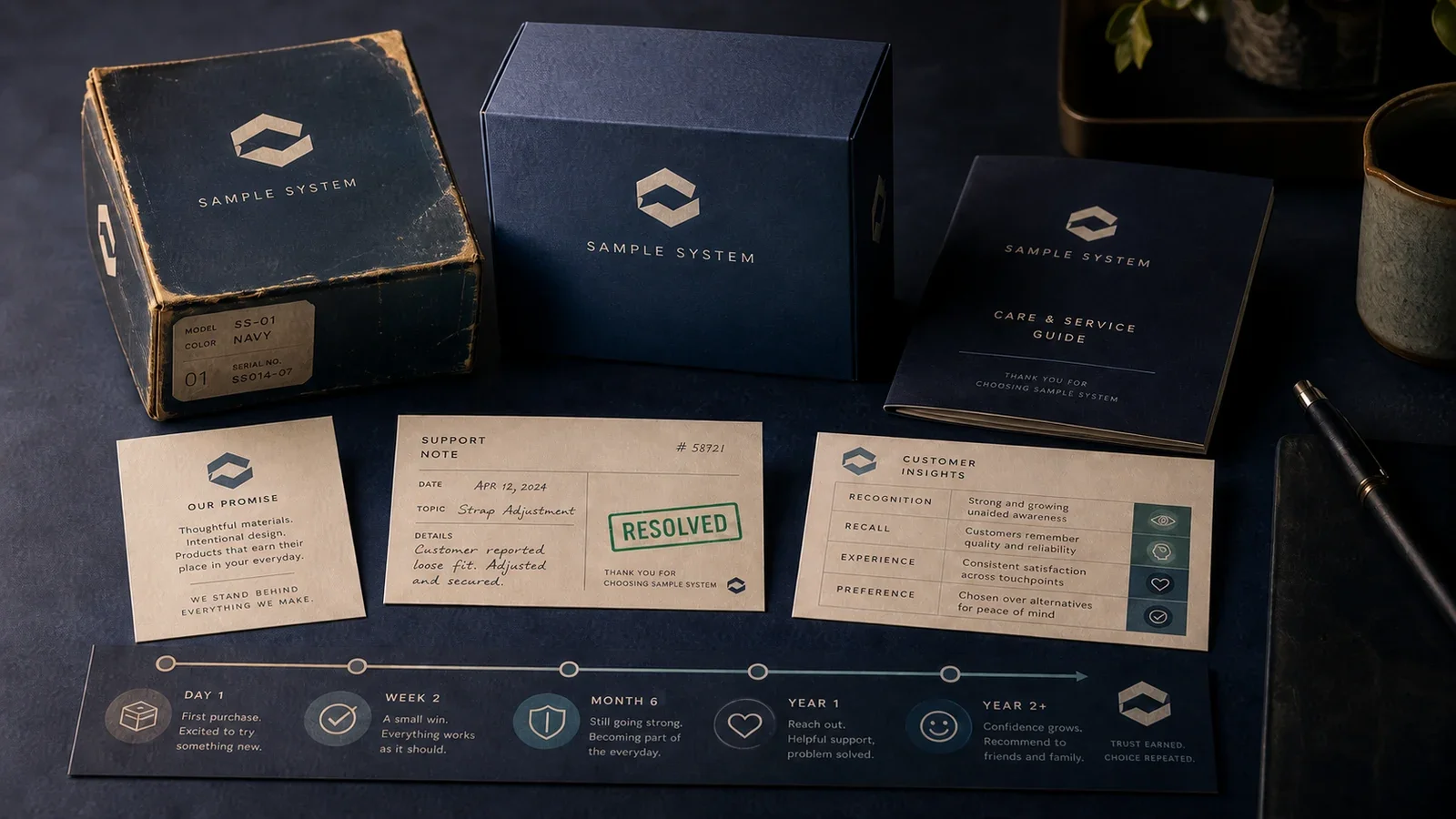
Brand equity is the added value linked to what people know, expect, remember, and experience about a brand. Two similar offers can be judged differently because one name carries stronger or clearer associations.
Brand equity is not cash in an account. It is also not the same as a formal brand valuation. A valuation applies a defined financial method. Equity is the wider set of market and customer effects that may support value.
How Does Brand Equity Work?
People encounter a name, promise, product, service, review, price, employee, or support moment. Those experiences form memory and expectations. Clear, repeated, and credible experiences can make the brand easier to recognize and evaluate. Poor or conflicting experiences can weaken it.
Awareness: people can recognize or recall the brand in a relevant situation.
Associations: people connect the brand with certain uses, qualities, people, places, or ideas.
Experienced quality: the offer and service meet the stated standard.
Preference and loyalty: some buyers choose or return to the brand when the fit remains good.
Protection and control: names, assets, rights, rules, and records help the brand operate consistently.
Why Is Brand Equity Important?
Brand equity can make a choice easier to understand and reduce the work needed to explain the offer. It can support launches, partnerships, hiring, distribution, retention, or price confidence. None of those outcomes is automatic. Product, service, access, evidence, competition, and economic conditions still matter.
Where Is Brand Equity Used?
Teams use the idea in brand strategy, marketing plans, portfolio decisions, licensing, partnerships, mergers, acquisitions, investor discussions, and brand valuation. Each use needs a suitable method and evidence.
A Hypothetical Example
Two software tools have similar features. One has a clear use case, reliable support, familiar design, and trusted documentation. Buyers may find it easier to shortlist. That difference can be a sign of equity, but a proper study would still test awareness, associations, experience, price, and actual choice.
Put It in Plain Words
Think of two shops on the same street. Both sell the same kind of bag. One shop has a name you know. You have used its bag for years. A friend has used it too. The staff fix faults when they arise. The label is easy to spot. The other shop is new to you. You know less about it. You may still buy from it, but you need more facts first.
The first name has a head start in your mind. That head start is one way to see brand equity. It came from what you saw, heard, and felt over time. It can help the shop earn a place on your short list. It does not mean the bag is best. It does not mean you will buy it. A high price, a poor fit, or a bad day at the shop can still change your choice.
This is why teams must test more than name recall. Ask what the name brings to mind. Ask what went well. Ask what went wrong. Ask why a buyer came back or left. Then match those views with real sales, care, and product data. Keep the time and group clear. Do not claim that the name caused each sale.
A team can start with a small scorecard. Can the right people name the brand? Do they know what it is for? Do their views match the real offer? Do buyers come back for a clear reason? Do poor reviews point to the same gap? None of these facts is enough on its own. Read them as one set.
How Can Brand Equity Be Measured?
Unaided and aided awareness for a defined audience and need.
Associations people give the brand, including unwanted ones.
Consideration, preference, repeat behavior, and reasons for leaving.
Experience measures such as service quality, complaints, returns, and support outcomes.
Price and choice studies that control for product, channel, place, and audience.
Formal valuation only when a qualified method and purpose are defined.
No single metric proves brand equity. Search volume, followers, or a survey can each show one part. Use several measures and state their limits.
Common Mistakes
Treating fame as positive equity without checking what people believe.
Claiming the brand caused sales when price, product, distribution, or service also changed.
Using a private valuation estimate as a public fact.
Ignoring negative associations, complaints, or poor employee experience.
Measuring one audience and applying the result to every market.
Frequently Asked Questions
Is brand equity the same as brand value?
Not always. Brand equity describes the added effects linked to the brand. Brand value often means a financial estimate made for a stated purpose and date.
Can a small business build brand equity?
Yes. A small firm can build clear local awareness, useful associations, and a reliable experience. The scale and measurement method should fit the business.
Next, read Brand System vs. One-Off Project and The ROI of Professional Branding.
Need a measurable brand plan?
Book a free Brand and Tech Assessment to map the current problem, evidence, constraints, and practical next step.
Sources
- ISO: ISO 10668 Brand valuation. https://www.iso.org/standard/77636.html
- IFRS Foundation: IAS 38 Intangible Assets. https://www.ifrs.org/issued-standards/list-of-standards/ias-38-intangible-assets/
- Kevin Lane Keller: Conceptualizing, Measuring, and Managing Customer-Based Brand Equity, Journal of Marketing, 1993.