What Is Keyword Difficulty?
Learn what keyword difficulty tools estimate, what the score leaves out, and how to use it without mistaking it for a ranking promise.

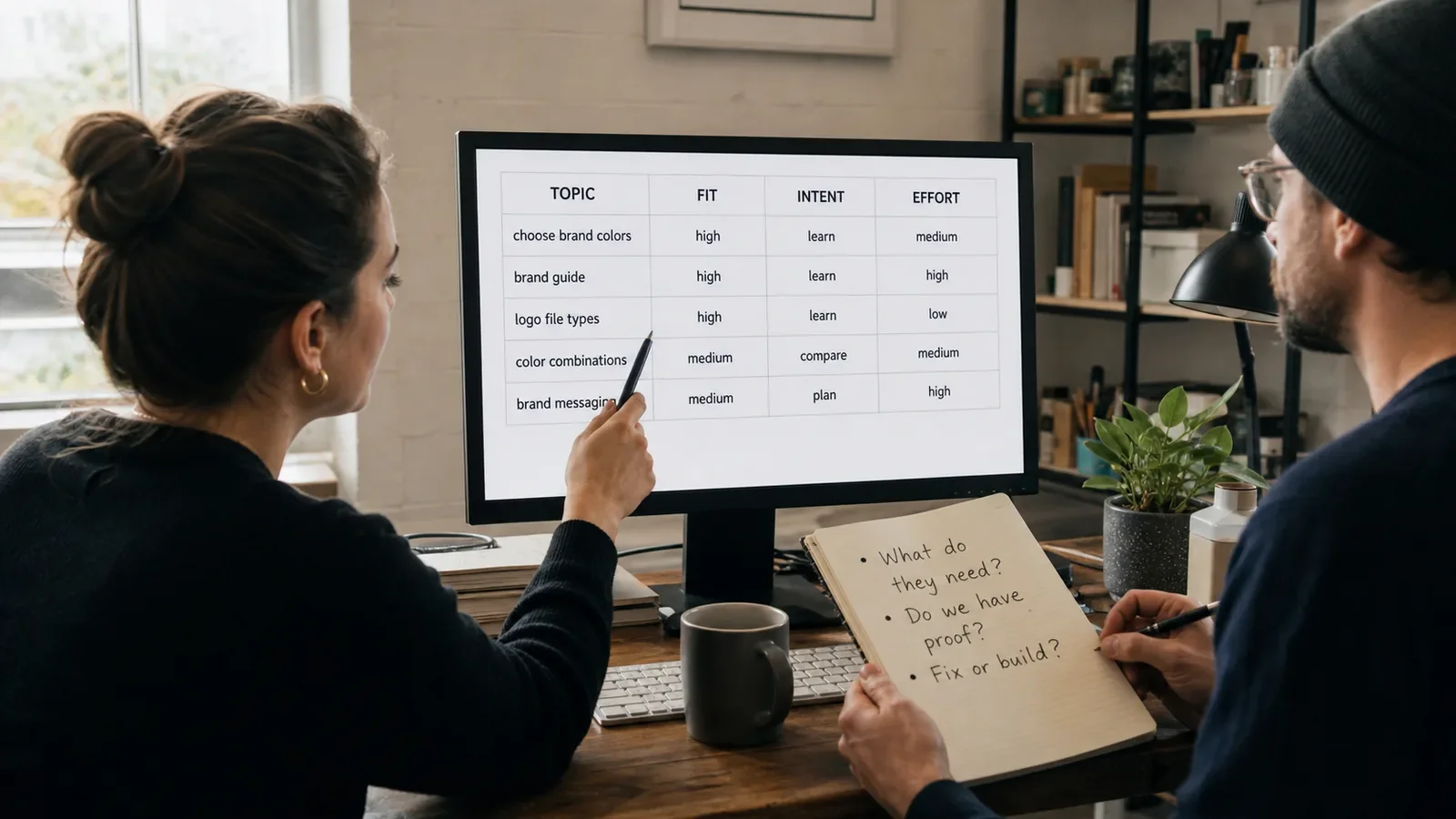
Keyword difficulty is a tool estimate of how hard it may be to earn a high organic search position for a search term. The score often uses the strength of pages and domains that already rank. Each provider has its own data and formula.
A difficulty score is not a Google metric. It does not know every fact about your page, audience, offer, or ability to answer the search well. Use it as one research signal, not as a yes-or-no rule.
Put It in Plain Words
A keyword tool looks at a search and the pages near the top. It then gives a rough level of competition. A higher number often means the current results are harder to replace.
The number can save time when you compare many terms. It cannot tell you whether the term is right for your business. A low score has little value if the searcher does not need your answer.
Search intent comes first. Read the results. Are people seeking a definition, a local service, a product, a calculator, or a recent answer? Build the page type the search calls for.
Your own site matters too. A term may be hard for a new site and more practical for a trusted site with close topical coverage. Some tools offer a personal score for this reason.
Difficulty can change. Results, links, content, search features, and tool data change. Record the provider, place, date, device, and score when a choice depends on it.
A sound plan mixes terms. Some pages answer narrow needs now. Other pages build a deep topic over time. Do not chase only easy numbers or only large search volumes.
Here is a quick way to use the score. Pick ten search terms. Put each term in a row. Add the score from one tool. Add the date and place too.
Next, read the search page for each term. Write down what the top pages do. Note if they are guides, shops, maps, clips, or tools. This shows the real task.
Now mark how well the task fits your site. Use a simple high, mid, or low mark. A hard term with a close fit may still be worth the work.
Check what you have now. You may own a strong page that needs a new fact or a clearer part. In that case, fix the page. Do not make a twin.
If the need is new, plan one useful page. Ask what proof you can add. Ask who can check the facts. Ask how the page will help a real person.
Set a fair goal. The first goal may be a page that can be found and read. The next may be more views. A lead or sale may take more time.
Keep the old score in your notes. Check it again when the tool adds new data. Do not change the plan due to one small move in the score.
How Does Keyword Difficulty Work?
A provider collects search results and link data, then applies its model. Semrush says its personal keyword difficulty estimates how hard it may be for a specified domain to reach the top ten for a keyword.
The estimate can include page and domain strength, backlinks, result features, and the relationship between the keyword and the site. The exact inputs and scale depend on the tool. Scores from two tools are not interchangeable.
Why Is It Important?
Difficulty helps teams compare the likely effort behind a list of topics. It can support research, sequencing, forecasts, and a balance between quick tests and long-term assets.
It should not override customer evidence. A hard term may still be vital to explain. An easy term may bring the wrong reader. The best choice joins intent, relevance, value, evidence, and realistic effort.
Where Is It Used?
Keyword research, content briefs, SEO roadmaps, and editorial calendars.
Competitor reviews and estimates of the work needed to enter a search result set.
Paid and organic planning when teams compare demand, cost, intent, and competition.
Reporting, when assumptions and score sources are clearly recorded.
A Simple Keyword Difficulty Example
Suppose a small studio compares “branding” with “how to choose a brand color palette.” The broad term may have more searches and stronger competing pages. The longer term may have clearer intent and a page format the studio can serve well.
The studio should still inspect the live results, check its existing coverage, and decide whether the answer serves a real reader. It should not publish a weak page only because a tool marks the term easy.
What Should You Review With the Score?
Search intent and the type of pages that currently satisfy it.
Business and audience relevance.
The quality, depth, freshness, and evidence of current results.
Links and referring domains, with care for relevance and legitimacy.
Your existing topic coverage, internal links, expertise, and resources.
Search features that may change clicks even when a page ranks.
How Do You Use Keyword Difficulty Well?
Build a topic list from customer questions, search data, sales calls, and service needs.
Group terms by intent so similar phrases do not become competing pages.
Record volume, difficulty, result type, relevance, and likely value.
Inspect the live results instead of trusting the score alone.
Choose whether to improve a canonical page or create a distinct new one.
Track impressions, clicks, useful actions, and page quality after release.
Keyword Difficulty vs. Search Volume
Difficulty estimates competition. Search volume estimates how often people search. Neither number tells you whether a term will help the right person or lead to a useful outcome.
Cost per click is different again. It reflects paid ad competition and pricing in a market. It can suggest commercial interest, but it does not state organic difficulty or conversion value.
Common Mistakes
Treating the score as a Google ranking factor.
Comparing scores from different providers as if they use one formula.
Ignoring intent, page type, location, date, and device.
Creating several pages for phrases that need one canonical answer.
Choosing a term only because it has high volume or low difficulty.
Frequently Asked Questions
What is a good keyword difficulty score?
There is no universal good score. Judge the term against your site, the current results, the audience need, and the value of a useful answer.
Can a new site rank for a hard keyword?
It may, but the work and time can be high. Start with real audience needs, strong pages, sound technical access, useful internal links, and legitimate ways to earn attention.
Should I target only low-difficulty keywords?
No. Use a mix that serves the topic and the business. Some difficult terms are essential reference pages even when they take longer to gain visibility.
Start with Keyword Research Basics, then use Keyword Research Is About Intent to keep the score in context.
Need a keyword plan based on intent, evidence, and realistic effort?
Book a free Brand and Tech Assessment to map the current problem, evidence, constraints, and practical next step.
Sources
- Semrush Knowledge Base: How is Personal Keyword Difficulty calculated? https://www.semrush.com/kb/1434-how-is-personal-keyword-difficulty-calculated
- Google Search Central: SEO Starter Guide. https://developers.google.com/search/docs/fundamentals/seo-starter-guide