What Is Organic Traffic?
Learn what unpaid search traffic means, how it is measured, why tools disagree, and how to judge its quality instead of counting visits alone.

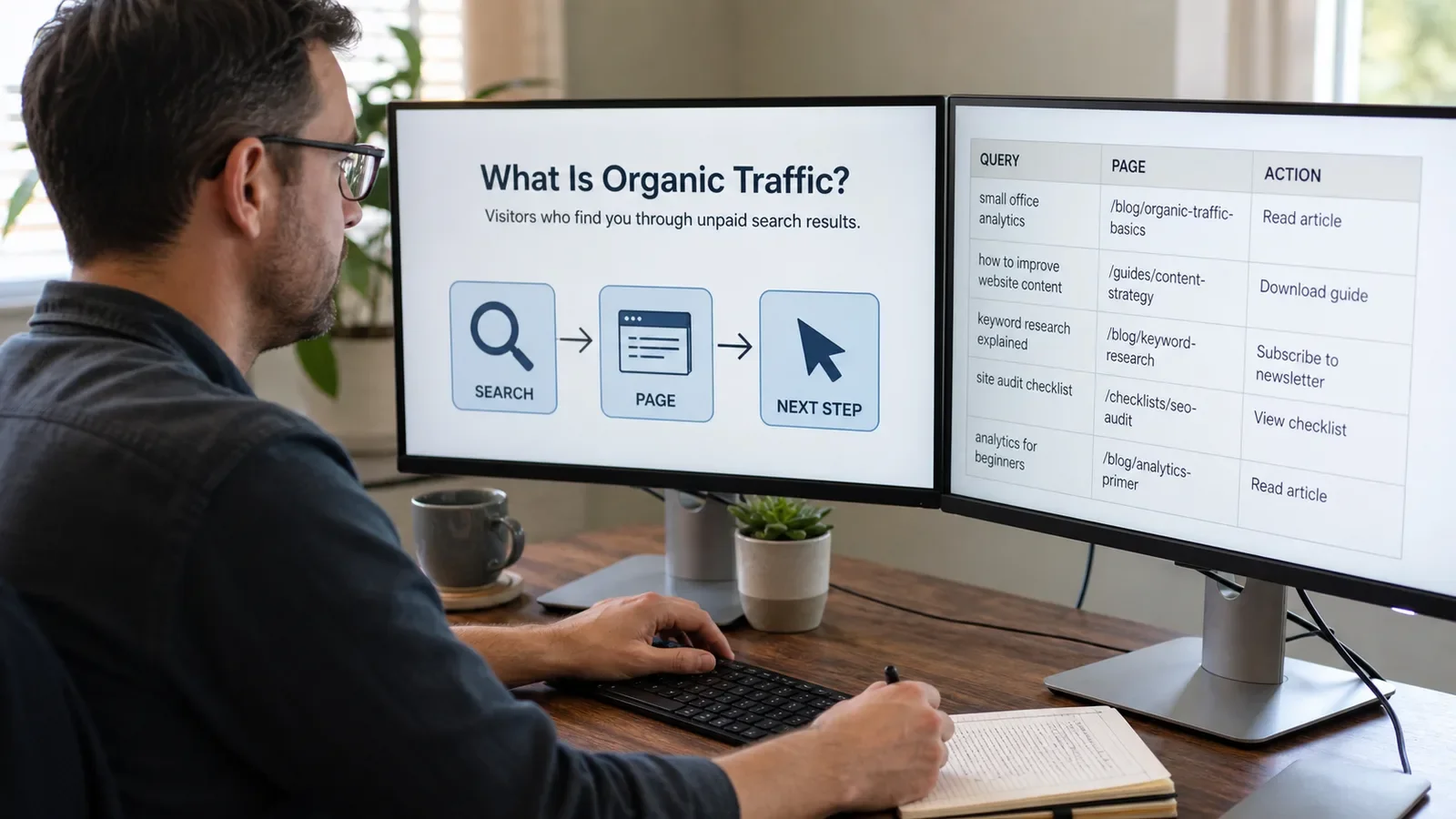
Organic traffic is website traffic that arrives through unpaid search results. In common SEO reporting, it means visits or clicks from search systems that were not bought as ads.
The term can vary by tool. Search Console reports clicks from Google Search. Analytics tools record sessions and classify sources. SEO platforms may estimate visits from rankings. These numbers measure different things and should not be expected to match exactly.
Put It in Plain Words
A person searches for an answer. They choose an unpaid result and visit the site. That visit is usually counted as organic search traffic.
Organic does not mean free. A useful site needs research, writing, design, development, review, hosting, maintenance, and measurement. The click is not purchased, but the work has a cost.
More traffic is not always better. A thousand visits from the wrong audience can create little value. Ten visits from people with the right need can be more useful.
Measure the path after the click. Did the page answer the question? Did the person continue, contact the team, use a tool, subscribe, or leave because the page was a poor match?
Keep search traffic separate from paid search, social, referrals, email, and direct traffic. Clear channel rules make trends easier to explain.
Do not treat an SEO tool estimate as first-party traffic. Use Search Console and analytics for your own site. Use third-party estimates for broad comparison, with their limits stated.
A simple report can start with four facts. How many people saw the page? How many chose it? What did they read? What did they do next?
Use the same date range each time. Compare this month with the month before and the same month last year. This can help show a real trend.
Mark site changes on the chart. A new page, moved link, broken form, or tracking fix can change the line. So can news, weather, and time of year.
Read the search terms. Some terms may name your brand. Some may ask for a service. Some may seek a quick fact. Put them in useful groups.
Look at each page, not just the whole site. One page may rise while one falls. A site total can hide both shifts.
Ask the sales or care team about lead fit. They may say that views are up but the new calls are wrong. That means the topic or next step may need work.
Check the page on a phone. Make sure it loads, reads well, and has a clear next step. A rank has less value when the page is hard to use.
Keep a note of gaps in the data. Some people do not allow tracking. Some tools group visits in a new way. A sound report states what it cannot know.
Use fair words in the report. Say the page was tied to a lead when that is all you know. Do not say it caused a sale with no proof.
The aim is not a line that goes up each day. The aim is to help the right people find a sound answer and take a useful next step.
How Does Organic Traffic Work?
Search engines crawl and index eligible pages, then may show them for relevant searches. When a person selects an unpaid result, the search platform may record a click and the site may record a visit or session.
Tracking can differ because of consent, privacy settings, time zones, redirects, browser limits, channel rules, and counting methods. Search Console and analytics answer related but different questions.
Why Is It Important?
Organic traffic can reveal whether people find a site when they have a relevant need. It can support education, brand discovery, demand capture, service access, sales, hiring, and support.
Traffic alone is not authority or business growth. Quality depends on the query, audience, page, location, device, next step, and outcome. Report both volume and useful actions.
Where Is It Used?
Search Console, analytics platforms, SEO tools, dashboards, and forecasts.
Content, technical SEO, local search, ecommerce, and editorial planning.
Attribution reviews that compare search with ads, referrals, social, and email.
Page-level reviews of queries, clicks, engagement, leads, and conversions.
A Simple Organic Traffic Example
A guide receives 500 Google Search clicks in one month. Analytics records 430 organic sessions. The values can differ because the tools use different rules. Neither number proves that the guide created revenue.
The team should review the queries, countries, devices, page actions, assisted journeys, contact quality, and known tracking gaps. It can then decide whether to improve the answer, the next step, or the measurement.
What Should an Organic Traffic Report Include?
The data source, property, channel rule, date range, and comparison period.
Queries, pages, countries, devices, clicks, impressions, and click-through rate.
Sessions, engaged visits, events, leads, sales, or other useful actions.
Brand and non-brand search when the distinction can be made responsibly.
Known changes in tracking, consent, site releases, seasonality, and demand.
Clear notes that separate measured data from third-party estimates.
How Do You Improve Organic Traffic Responsibly?
Confirm that important pages can be crawled, indexed, and rendered.
Find real audience questions from first-party data and direct research.
Improve one canonical page for each distinct intent.
Add clear metadata, headings, internal links, sources, and useful next steps.
Earn legitimate attention through valuable work and relevant outreach.
Measure qualified outcomes and keep pages accurate after release.
Organic Traffic vs. Paid Search Traffic
Organic traffic comes from unpaid results. Paid search traffic comes from ads bought through an ad platform. Both require strategy, landing pages, quality control, and measurement.
Referral traffic comes from links on other sites. Direct traffic is a channel label often used when a tool lacks a known referrer. Channel names depend on the analytics setup.
Common Mistakes
Calling organic traffic free traffic.
Reporting a third-party estimate as measured website visits.
Celebrating traffic growth without checking intent or outcomes.
Comparing tools without explaining their counting rules.
Publishing many thin pages only to increase indexed page count.
Frequently Asked Questions
Why do Search Console and analytics disagree?
Search Console counts Google Search activity. Analytics records site activity under its own channel, consent, and session rules. Use each tool for the question it can answer.
Is organic traffic free?
The search click is unpaid, but creating and maintaining a useful, accessible, secure, and measurable site takes people, time, and money.
How long does organic traffic take to grow?
There is no fixed period. Demand, competition, crawl access, site history, page quality, links, and release speed all matter. Use ranges and milestones instead of guarantees.
Read SEO Is Not Free Traffic for the true cost, then use How Much Traffic Can SEO Bring? for a grounded estimate.
Need organic growth tied to useful business evidence?
Book a free Brand and Tech Assessment to map the current problem, evidence, constraints, and practical next step.
Sources
- Google Search Console Help: How are you performing on Google? https://support.google.com/webmasters/answer/10268906
- Google Search Console Help: Performance report common tasks and use cases. https://support.google.com/webmasters/answer/17010961
- Google Search Console Help: Performance report data. https://support.google.com/webmasters/answer/17011364