What Is Pay-Per-Click Advertising?
Learn how PPC ads work, what a paid click means, how the ad sale and landing page link, and which limits matter before launch.

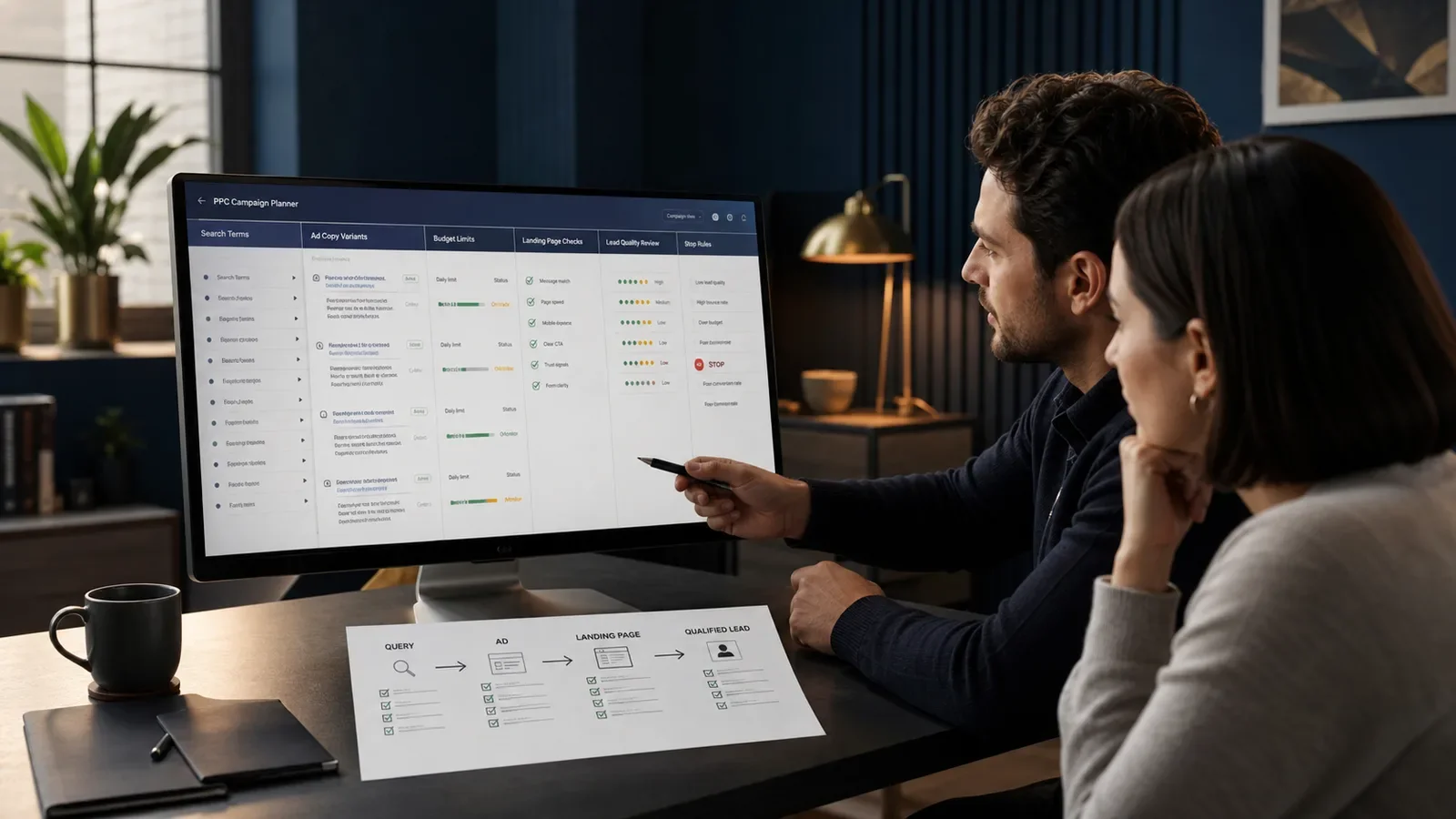
Pay-per-click ads, or PPC, are paid ads that can lead to a charge when someone clicks. Search ads are a common form. Click-based prices can also be used for banner, social, shop, and other ads.
PPC names the way the fee works. It does not promise a top spot, site visits, leads, or sales. Each ad site has its own sale, fit rules, way to show ads, way to track them, and bill terms.
Put It in Plain Words
A business chooses a goal and a group it can lawfully reach. It writes an ad and sends the click to a useful page.
The platform decides whether the ad can enter an auction. A bid may matter, but relevance, quality, context, policy, and competition can matter too.
A maximum bid is a limit or input. It is not always the amount charged. Automated bidding can use different rules.
A click only shows that the ad received an interaction. It does not prove that the visitor understood the offer or became a customer.
The landing page must match the ad. Price, eligibility, limits, privacy, and the real next step should not appear as a surprise.
Tracking needs a defined event and a working consent path. The team should know what the platform can see and what its own records prove.
A campaign needs a budget, owner, review date, and stop rule. More traffic is not a reason to keep a harmful or misleading path.
Start with one bounded campaign. Name the audience, need, ad promise, page, action, budget, and evidence.
Open the ad as a reader. Ask what you expect after the click. Then open the page and check whether that expectation is met.
Test the form, phone, checkout, error, cancel, and confirmation states. A measured click with a broken next step has little use.
Separate platform numbers from business records. Reconcile spend, clicks, accepted leads, orders, refunds, and service capacity.
Review search terms, placements, exclusions, access, and complaints. Remove traffic that the business should not pursue.
Record what changed and when. Without a change log, a later result cannot explain which decision may have mattered.
Do not treat one campaign as universal evidence. A result can change with time, market, device, offer, and measurement.
How Does Pay-Per-Click Advertising Work?
The ad buyer sets the goal, target group, ad, page, fund limit, and bid plan. The ad site checks which ads may join when a chance to show one comes up. It may charge for a valid click under its rules.
The buyer checks reach, cost, search terms or ad spots, use of the next page, fit of each lead, and complaints. The buyer then keeps, changes, or stops the ad under a written test plan.
Why Is It Important?
PPC can give a brand a set way to put an offer in front of a known group and learn from a small test. It can also spend funds fast, so clear rules matter from the first click.
A low cost per click is not good by itself. The click must come from the right type of person, reach a true and clear page, and link to a result the brand can check and serve.
Where Is It Used?
Search, banner, social, video, shop, app, and local ads.
Demand capture, launches, events, hiring, sales, and return ads where the rules allow them.
Tests of the ad claim, next page, target group, and channel with clear limits.
A Simple PPC Advertising Example
A repair company may run a small search campaign for one service area and one urgent service. The ad states the service and hours, while the page explains eligibility, price factors, response limits, and the request process.
The team compares platform clicks with accepted service requests. It does not call every click a lead or infer that an ad caused work without checking records and other paths.
What Should a PPC Plan Include?
Goal, target group, place, and groups to leave out.
Search words or ad spots, ad text and art, proof, and rule check.
Next page, key act, consent, and fail states.
Fund limit, bid type, bill rules, and owner.
Clear business result and a way to match the records.
Check date, change log, stop rule, and data-life limit.
How Do You Start a PPC Campaign?
Name the business choice and the work the team can serve.
Choose a channel and a small group that fits.
Write a true ad and a page that matches it.
Set the fund limit, tracking, access, and consent.
Run a small test and match the records.
Keep, change, or stop based on proof the team has checked.
PPC vs. CPC
PPC usually names the advertising model. Cost per click, or CPC, is the amount charged or calculated for a click. A PPC campaign may report average CPC, while another campaign can optimize toward a different event.
PPC is not the same as SEO. PPC buys eligible ad delivery under platform rules. SEO works on unpaid search visibility and does not create a fee for each organic click.
Common Mistakes
Choosing search words before the offer and work limit are clear.
Sending all ads to a broad home page.
Calling clicks leads or sales.
Ignoring search terms, ad spots, consent, or false clicks.
Changing many things with no log or stop rule.
Frequently Asked Questions
Do you pay for every PPC click?
Billing depends on the platform, campaign, invalid-click rules, credits, and bidding model. Read the current platform terms and reconcile charges rather than assuming every recorded click is billed the same way.
Does a higher bid guarantee the top position?
No. Auctions can consider eligibility, quality, context, competition, thresholds, assets, and other platform-specific factors as well as bids.
How much should a business spend?
There is no universal amount. Start from capacity, margins, evidence needs, risk, and a loss limit that the business can afford.
Use How Much Does PPC Cost for Small Business? for budget factors and Should I Hire a PPC Agency? for ownership choices.
Need a paid-search plan with clear evidence, limits, and ownership?
Book a free Brand and Tech Assessment to map the current problem, evidence, constraints, and practical next step.
Sources
- Google Ads Help: Cost-per-click bidding definition. https://support.google.com/google-ads/answer/116495?hl=en-EN
- Google Ads Help: Understanding bidding basics. https://support.google.com/google-ads/answer/2459326?hl=en