Art Direction vs. Creative Direction: What Does Your Brand Need?
Creative direction defines the governing idea; art direction turns it into a coherent visual system. Here is how to scope the right engagement.

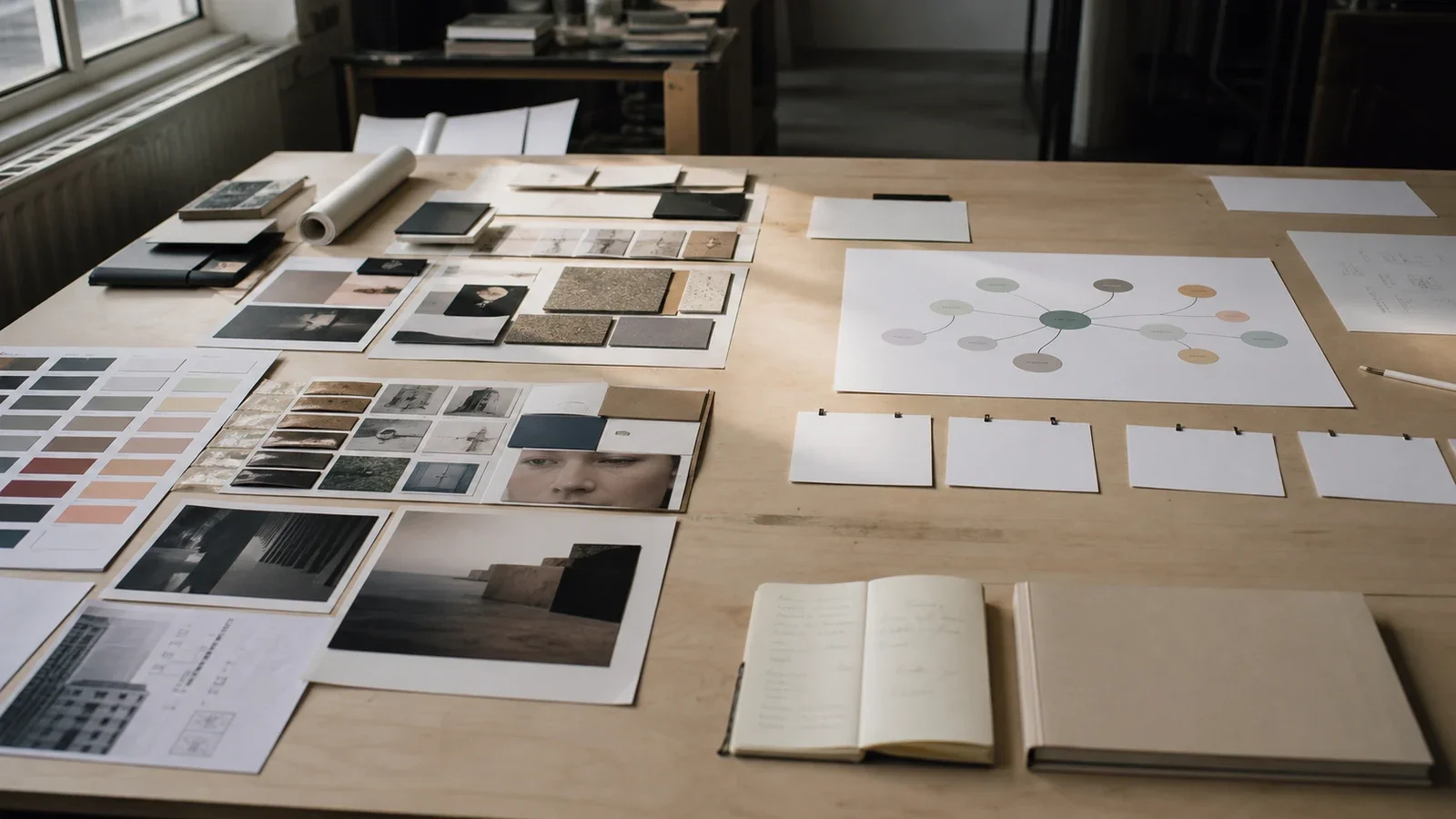
Start with the problem, not the job title. Creative direction sets the main idea and story for a brand. Art direction turns that idea into a clear visual system. It guides images, type, color, motion, and layout. You may need one role or both. First, find where the work breaks down. Is the idea unclear? Do visuals drift? Is daily output hard to control?
The roles shape different parts of the work. A creative director often sets the brand idea, voice, and campaign logic. An art director sets the visual language and the rules for its use. Both need sound judgment. One leads the concept. The other guards visual craft and keeps it consistent.
A Decision Framework for Buyers
Before you write a brief or check a partner, find your main need. Ask three questions.
Is the main problem a brand with no clear point of view? Does it lack a story that can hold products, campaigns, and culture together? That is a creative-direction problem.
Is the plan sound, but the visual work looks uneven or old? Do channels look like different brands? That points to an art-direction problem.
Is the pace of work beating quality control? Do you need someone to guard the visuals full time? That is likely an art-direction or design-ops gap.
The answers may overlap, but one need often comes first. A big brand change may need a clear creative idea before visual work starts. A visual refresh or campaign system may start with art direction if the plan is already sound. A full rebrand can need both roles. Write down who owns each choice and when the handoff takes place.
The How to Choose a Branding Agency article is a wider guide to checking partners. Use it with this role check.
Scope and Core Deliverables
A creative-direction job usually delivers:
A brand platform or strategy paper. It sets out purpose, place in the market, character, and value offer.
Story frameworks: message setup, story pillars, and key campaign ideas.
Creative briefs for big projects.
Concept guidelines. These set tone, voice, and story rules, not pixel-level rules.
A way to make choices. It lets in-house teams judge creative work against the idea.
An art-direction job usually delivers:
A visual identity system. It covers logos, color sets, fonts, image looks, and motion.
Full brand guidelines that write down the visual rules and show use examples.
Asset libraries: templates, master files, and digital part kits.
Art direction for set jobs. That can mean photo shoots, video, drawings, or spaces.
Design-ops playbooks. These set review times, toolkits, and sign-off steps that keep visuals the same.
Many studios bundle strategy and visual work. Ask which layer each fee covers. What Is Inside a Brand Guideline shows the usual parts of a brand guide. Some guides stick to visual rules. Others also tie the rules to the brand idea.
Process Patterns
Both roles can use an explore-then-focus process. The Design Council calls its model Discover, Define, Develop, and Deliver. A creative lead may focus on the first two stages. An art lead may take over once the team has a clear brief. The handoff should be clear. A small team may keep both roles with one senior person.
Do not pick a partner from a fixed timeline quoted without a brief. The schedule depends on scope, decision access, review rounds, formats, and rights checks. Ask each bidder to name its phases, inputs, owners, review points, and signs of delay. Compare those plans on the same scope. Treat any schedule as an estimate, not a promised result.
Buyer Questions to Test Fit
When checking creative directors, ask:
"Walk us through a brand platform you built. How did the strategy insight lead to the creative idea?"
“How do you test if an idea is strong enough to guide product design, the campaign, and the culture inside?”
“What outputs does your creative-direction work make that an inside team can use on their own?”
"How do you hand off to designers or art directors?"
When checking art directors, ask:
“Show us a visual system you built. What were the must-follow rules, and where did you allow give?”
"How do you approach ease of use from the start of a visual identity project?"
“Show how you used one identity across very different formats. What changed for packaging, apps, signs, or events? What stayed the same?”
"What do you include in your guidelines to stop team drift after launch?"
For both roles, ask how they handle unclear cases, stakeholder reviews, and scope growth. The Freelancer vs. Agency vs. Studio article compares ways to deliver work. Use it to match the setup to the role.
Red Flags in Hiring
Poor hires often show the same warning signs. Watch for these:
The candidate treats creative direction as logo design. It should guide the core idea, not just one piece of art.
The art director cannot say how a visual system ties to the brand plan. Craft with no idea behind it makes a weak identity.
The candidate promises strategy but cannot explain the research or how the choice was made. With no clear process, strategy is just an opinion.
The proposal hides the true scope behind a grand job title. A visual update is not always a full rebrand. A workshop is not a full brand platform. Match the title to the work.
The proposal ignores access and ease of use. Ask how the team will test color, type, images, and controls on real screens.
Accessibility and Digital-First Safeguards
Ask how the visual system will work on screens. WCAG 2.2 covers text alternatives, contrast, and images of text. The team should test key colors, type, controls, charts, and image looks in real layouts. A print-first identity still needs a digital plan. Write down any limits and agreed fallbacks in the brand guide.
Rights, Ownership, and Transition
Put intellectual property terms in writing before work starts. Under U.S. law, owning a file or an object does not by itself transfer copyright. AIGA's standard agreement offers other terms, such as licenses and assignments. Do not assume that payment alone hands over every right. Say who owns final work, working files, unused ideas, templates, fonts, photos, and other licensed assets. Ask a lawyer when rights are central or the parties work in more than one country.
Set a handover plan as well. Write down the choices, reasons, and guardrails behind the work. An art-direction handoff may include master files, editable templates, and a clear brand guide. A creative-direction handoff may include the core idea, story rules, and sample briefs. Name the tools, file formats, access rights, and training the team will get.
FAQ
Can one person do both jobs?
For brand work, one person can hold both roles if the scope and skill fit are clear. As the program grows, it often helps to split the roles. One person can guard the big idea while another controls the visual detail.
Our agency says they include “creative direction” in the retainer. What should that include?
Ask for a clear description of the creative-direction output. It should be more than review rounds on production work. At the least, expect a strategy framing of each campaign or project. That means the insight, the main idea, and how it ties to the brand platform. If the retainer covers only design or production, you are not getting creative direction.
We have an in-house design team. Do we still need an art director?
An in-house team gains from art direction when output is high and the look is slipping. It also helps when the team cannot set standards across the system. The art director builds the visual system and trains the team to use it. This lifts quality with no need for a full creative director.
How do we brief an art director differently from a creative director?
A creative-direction brief should cover the business problem, the audience, the brand today, and the change you want. An art-direction brief should list the chosen plan, output types, current visual limits, and tech needs. Give both roles the brand history, past work, and known misses.
Sources
- The Design Council describes Discover, Define, Develop, and Deliver as a general design-process model. - https://www.designcouncil.org.uk/resources/the-double-diamond/
- AIGA provides a customizable design-services agreement with intellectual-property provisions. - https://www.aiga.org/resources/aiga-standard-form-of-agreement-for-design-services
- U.S. law distinguishes ownership of a material object from ownership of copyright and sets rules for ownership and transfer. - https://www.copyright.gov/title17/92chap2.html
- WCAG 2.2 includes non-text content, contrast, and images-of-text success criteria relevant to digital brand systems. - https://www.w3.org/TR/WCAG22/
Need a clearer creative brief?
Book a free Brand and Tech Assessment to map the current problem, evidence, constraints, and practical next step.