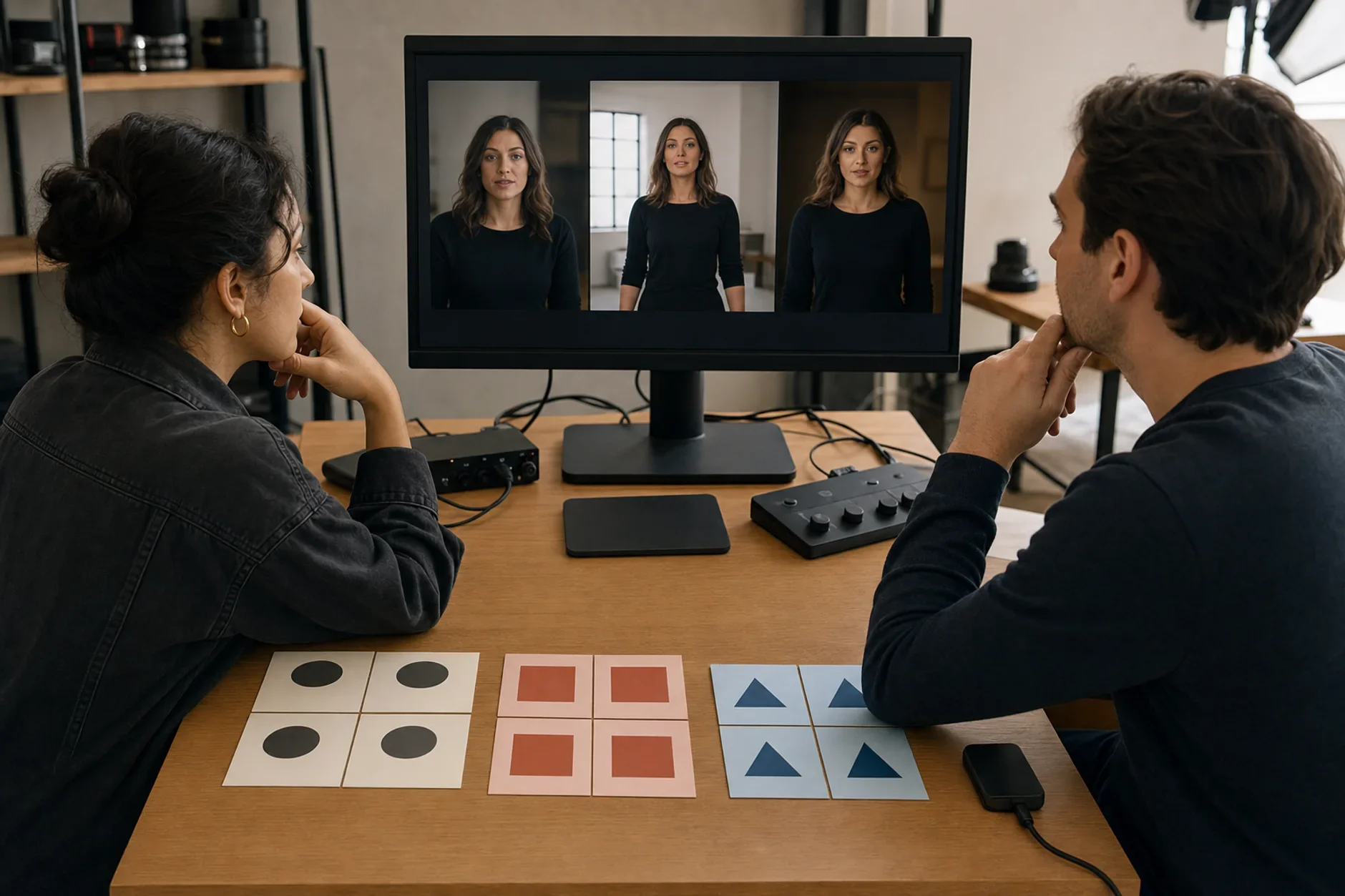
From Frustration to Framework: Solving AI Avatar Inconsistency
The frustration most people feel with AI avatar tools is not a sign they're doing it wrong. It's a signal that they're using the wrong architecture. Here's what the right one looks like.


AI avatar frustration is real, and it is almost never your fault. The same pattern shows up in nearly every conversation about these tools. People are not bad at prompting. They are not using the wrong models. They are running a process that was never built to give steady results. Then they blame themselves. But the real problem lives in the tooling, not in the user.
Here is where that frustration comes from. Here is what it points to. And here is the path to a system that works. Because a path does exist. The frustration is not permanent. It is a useful signal.
What the frustration is actually telling you
Most people describe the problem in the same way. "I can't get consistent results." "What worked last week fails now." "Different models give me a completely different look." "I spend hours and it still feels like a roll of the dice." These are not skill complaints. They are accurate readings of a real flaw in raw-model avatar generation.
Inconsistency between sessions is real. Models are not fixed. Their output shifts over time.
Cross-model variation is real. Prompt syntax and default looks differ from one model to the next.
The "roll of the dice" feeling is accurate. Without a clear framework, each result is just a game of chance.
The time cost is real. Hours of work per decent result is common. User research shows the same thing.
The architectural shift that resolves the frustration
The fix is a shift in setup, not a skill upgrade. You move from raw model access to a structured framework. Raw access gives you a text field and little else. You must learn how each model reads your words. You must learn its default style. You must learn how its safety rules change your output. And all of that shifts when the model updates. A structured framework handles every part of this for you. It gives you a clear interface instead.
This is not a small upgrade to the experience. It is a whole new relationship with the technology. Today you bend your workflow to fit each model's quirks. With a framework, the model bends to fit your workflow. That flip is the line between a tool that works for you and a tool you work for.
What the framework state looks like in practice
With a real avatar framework, the experience feels very different. You set your avatar choices once. You pick the look, the lighting, the background, the tone, and the style. Those choices become a setup you own. Run that setup next week and it matches this week. Hand it to a teammate and they get the same result. When the model updates, your output stays steady. The frustration cycle ends.
The Kyndrify path from frustration to framework
This shift is what Kyndrify is built to support. Maybe you are stuck in the frustration phase now. You run prompts. You get mixed results. Your setup breaks after each model update. You burn hours you do not have. The practical move is simple. Stop fighting the raw models and switch to a framework. Kyndrify gives you that framework. It uses a button-based interface where your choices map to tested, steady avatar setups across many models.
The payoff is more than better single images. It is a system you can repeat. You move from "I hope this works today" to "I know what this makes." That shift, from hoping to knowing, is what turns a frustrating test into a real working tool. Kyndrify is built to make that shift as direct as it can be.
The honest take
If AI avatar tools have frustrated you, that frustration is valid. Treat it as data. It is telling you that your setup has a structure problem, not a skill problem. The answer is not to try harder at prompting. The answer is a framework that removes the need for prompting skill at all. That problem can be solved. And the solution is already here.
Sources
TTGC / Kyndrify - patterns from building AI avatar tooling.
Nielsen Norman Group - user research on cognitive load and interface design in creative tools. nngroup.com
Ready to work with Through The Glass Creatives?
Book a free Brand and Growth Assessment and see exactly how Mherie, Ravve, and the TTGC team would approach it.
Related reading: Why AI Avatar Results Are So Inconsistent (and How to Fix It) · Why Building an Avatar Feels Harder Than It Should