The Brand-Voice Framework for AI Avatars
Most brands spend weeks perfecting their tone of voice and thirty seconds choosing their AI avatar. This framework fixes that asymmetry.


Strong brands sound the same in every place. But a gap often shows up. The gap sits between a brand voice ai avatar and the words a company uses. Brand voice is the tone, the words, and the feeling that make a message yours. The avatar is the visual face of the people behind the brand. The two often live in different worlds. The copy says "trusted authority." The avatar says "stock photo person." The copy says "warm and human." The avatar says "boss who never smiles."
Brand voice is not just words. What people see speaks in the same tone, or it clashes with it. An AI avatar that fights your brand voice is not a small style issue. It leaks credibility. People often see your avatar before they read a single word of copy. They form an impression first. Your copy then has to support that impression, or argue with it. This framework keeps the two on the same side.
Map Your Verbal Voice to Its Visual Equivalents
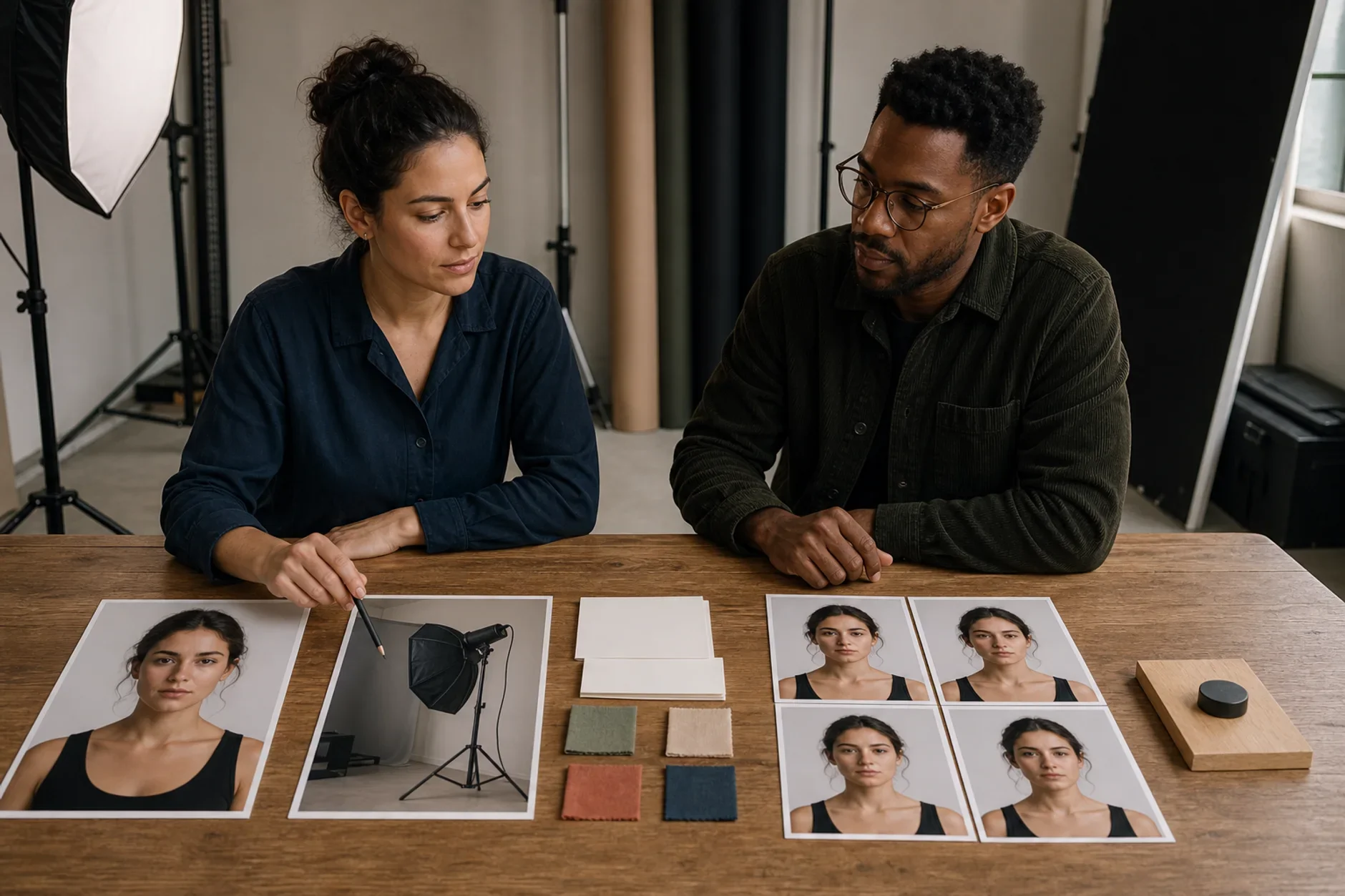
The framework starts with your brand voice notes. No formal notes? Then name your top three to five brand voice traits. Take each one and turn it into a picture. Ask what this looks like. "Direct and confident" becomes eye contact, a slight lean in, and a clean backdrop. "Warm and personable" becomes a real smile, soft light, and warmer color. "Premium and considered" becomes clothes that fit, a clean backdrop, and clear intent in the framing. Write these down. They become your visual voice guide.
Start with 3-5 written brand voice attributes
Turn each one into visual parameters: expression, light, wardrobe, background, composition
Spot attributes that clash, then resolve them by setting the hierarchy (which one leads?)
Write the visual voice guide as a one page spec, not a mood board
Color Consistency Is Not Optional
Most brand guides list a color palette. Most AI avatar briefs ignore it. That is a big missed chance. The clothes and backdrop in your avatar carry brand color right away. Say your palette leans on midnight navy and warm cream. A navy outfit on a warm off white backdrop is more than good looking. It fits the brand. It builds on every other brand asset. Your avatar, website, and email sign off then feel like one thing. Now picture the avatar in bright red on a gray backdrop, with no tie to your look. The whole thing seems like a committee built it.
The Emotional Register Test
Once you make a first avatar, run the emotional register test. Show the image to three people who do not know your brand. Ask each one to describe the person in three words. Give no context and no framing. Now compare their words to your three main brand voice traits. A lot of overlap means the avatar speaks in your brand voice. Little overlap means it speaks of something else. That something may even fight what your copy and your position work to build. The test takes ten minutes. It finds problems a visual review alone can miss.
Kyndrify Encodes the Brand-Voice Spec Into the Generation Process
Brand voice driven avatar work has one hard problem. The spec has to travel across sessions, models, and team members without breaking down. A visual voice guide in a Notion doc gets watered down. People skip details when they rush. They read vague specs in their own way. In time, the brand coherence you built falls apart. Kyndrify deals with this by baking the brand settings into the platform, not into a text file. Then you make a new version, such as a fresh photo, a size for another platform, or a second team member. The brand spec is already in the setup. No one has to read it again. It gets used the same way each time.
Brand voice fit in AI avatars is a skill, not a detail. It needs the same care you give your copy and design rules. And it pays back the same way. You get coherence that builds over time. You get first views that back your position instead of fighting it. You get a visual presence that clearly belongs to your brand, not to a stranger in a suit.
Sources
TTGC / Kyndrify - patterns from building AI avatar tooling.
Nielsen Norman Group - research on visual brand coherence and user trust. nngroup.com
Lucidpress - brand consistency research. lucidpress.com
Ready to work with Through The Glass Creatives?
Book a free Brand and Growth Assessment and see exactly how Mherie, Ravve, and the TTGC team would approach it.
Related reading: How to Make an AI Avatar That Matches Your Brand Voice · The Framework That Makes AI Avatars Actually Repeatable