What Foreign Partners See First (and Why It Quietly Decides the Deal)
Before the agenda is read, before introductions are made, foreign partners have already formed a working impression of who they're dealing with. Here's what shapes it.


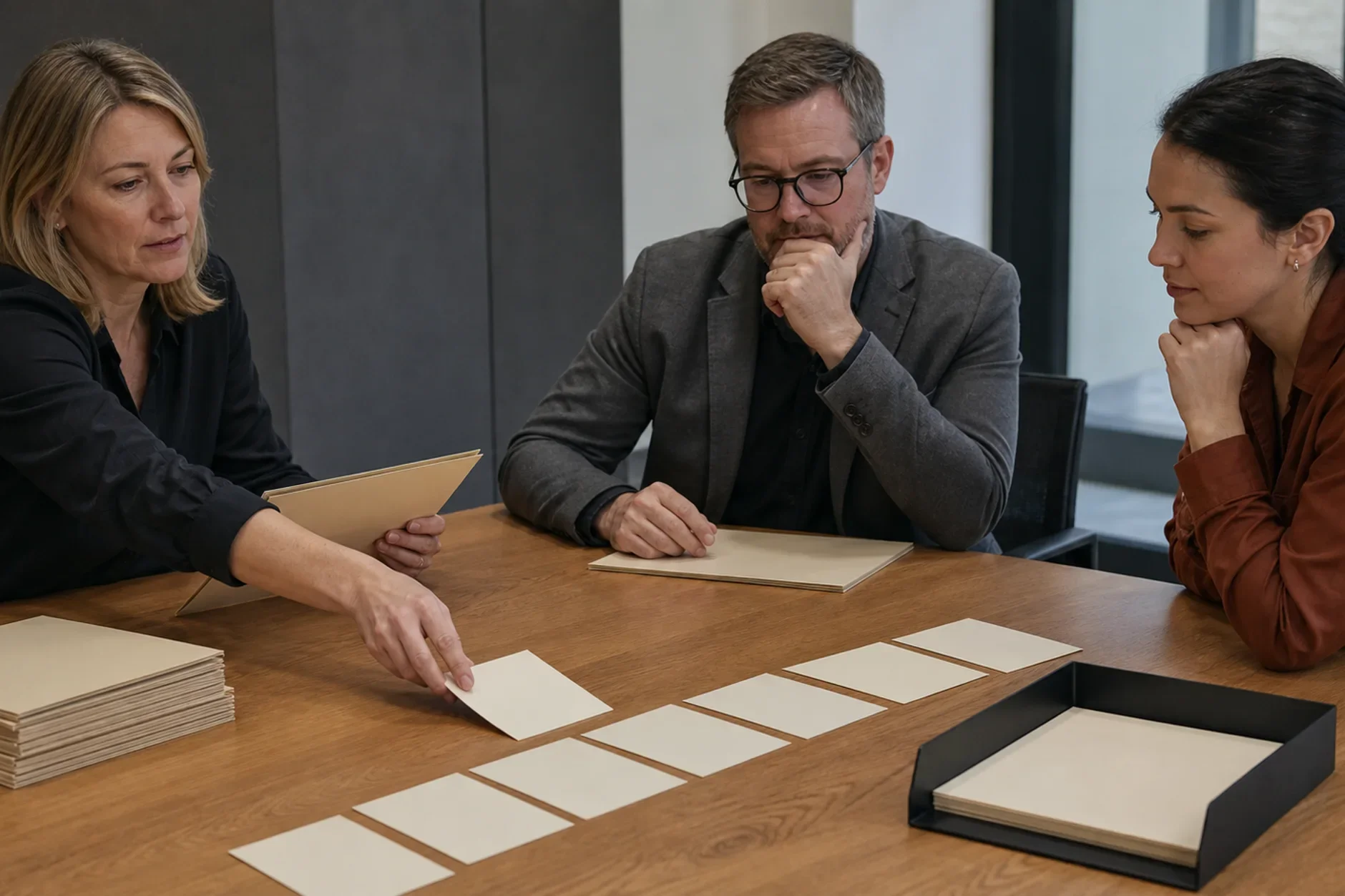
One moment happens over and over in international talks. Yet almost no one talks about it. It is the gap between the time a foreign official sits down and the time the meeting starts. This gap shapes the first impression that negotiations depend on. It often lasts thirty seconds to two minutes. In that short time, the official reads everything. They take in the quality of the materials. They notice the logo on the cover page. They check whether the identity stays the same across the table. And they start to form a verdict.
It's not a flaw. That's just how perception works. People judge credibility fast in high-level meetings. They must do this. They don't have time to weigh everything. Visual signals give them a fast shortcut. This is the surest one.
The five things foreign partners read before the first word
Big international meetings have key moments. A few visual signs stand out. They carry the most weight. This happens early on. Here are those signs. They matter most in the first minutes.
Logo quality - is the mark crisp and modern, used with real confidence? Or is it blurry, dated, and off-brand?
Do all folders, files, and other items match? Do they share the same look? Or does each item seem to come from a different team?
Typography and layout - is the design clean and easy to read? Or was it clearly made with no design standard?
Look at the color choices. - Do they seem planned? - Or do they look like computer defaults? - This matters to foreign partners.
Cultural confidence - does the identity show pride in its roots? Or does it try too hard to copy outside styles?
Why this "quietly decides the deal"
The phrase was picked carefully. These visual signals can't fix a bad deal. They won't save a poor agreement either. But they set the level for talks. First impressions from these signals stick. They create a frame for reading everything later. A strong first impression helps. Your proposal gets heard with some benefit of doubt. A weak one hurts. You start at a small deficit. Your arguments must then make up for lost ground.
"In international negotiations, you do not get a second chance to make a first institutional impression. The identity on the folder is that impression."
What OWWA's new identity changes in the room
The "Pagyakap sa Inang Bayan" identity is modern and proud of its roots. In a meeting room, things change right away. OWWA no longer has to prove itself visually. People take OWWA seriously from the start. The new look makes that clear. It says this agency is worth talking to. OWWA negotiates for 10 million workers. For an agency this big, first impressions matter.
To see how perception drives negotiation outcomes, read Before You Say a Word: How a Logo Speaks at the Negotiating Table. Want the full identity project? Read the OWWA case study. Visit the series hub too.
Sources
Amy Cuddy, Susan Fiske, and Peter Glick wrote a paper. The title is "Warmth and Competence as Universal Dimensions of Social Perception." It was published in *Advances in Experimental Social Psychology* in 2008.
Through The Glass Creatives. OWWA identity case study. February 2025.
The Filipino Times shared this news. It's called "OWWA launches new logo, new identity." It came out in February 2025.
What does your brand say before you say anything?
Book a free Brand and Tech Assessment to see how TTGC would grow your organic visibility.