What Is a Creative Brief?
Learn how a short decision document aligns the problem, audience, message, evidence, deliverables, limits, owners, and review before creative work begins.

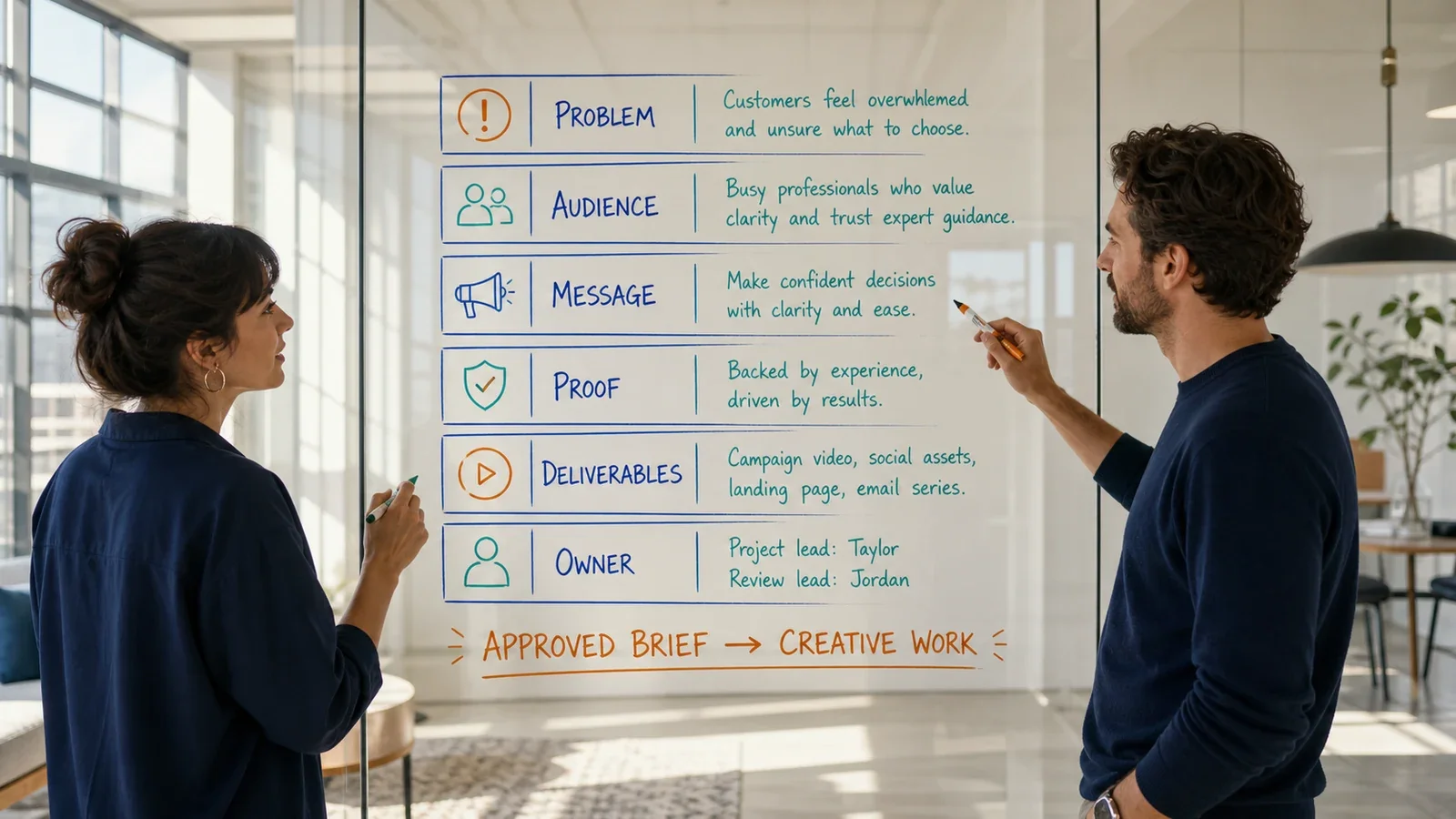
A creative brief is a short decision document for creative work. It explains the problem, audience, required response, main message, evidence, deliverables, limits, owners, timing, and approval path.
It is not a long collection of background notes. It should help a writer, designer, filmmaker, strategist, or agency make choices without guessing what success or approval means.
How Does a Creative Brief Work?
The owner gathers facts, resolves conflicts, and writes the few decisions the team needs. Stakeholders approve the brief before production. The creative team then explores solutions inside the stated goal and limits. If the goal changes, the brief changes before the work does.
What Should a Creative Brief Include?
The business or user problem, written without prescribing the design.
The defined audience and the context in which they will see the work.
The one main idea or action the work should make clear.
Approved facts, proof, claims, sources, and required legal or expert review.
Deliverables, formats, channels, languages, access needs, and technical limits.
Budget, timing, owners, approval stages, change rules, and final handoff.
How the team will judge the work, including what the creative cannot control.
Why Is a Creative Brief Important?
A useful brief aligns decisions before expensive production begins. It gives creative people enough freedom to solve the problem while protecting facts, rights, access, timing, and scope. It also creates a record of what was approved.
Where Is a Creative Brief Used?
Creative briefs are used for brand identities, campaigns, websites, packaging, videos, content, events, social posts, photography, product launches, and internal communications. Large programs may use one master brief plus smaller channel briefs.
A Hypothetical Creative Brief Example
A local museum needs a campaign for a new evening program. The audience is working adults within travel distance. The message is that the museum is open late on Fridays, not that every visit will feel the same. Deliverables include one landing page, station posters, and short social videos. The museum owns fact review, image rights, access checks, dates, and ticket capacity. The team measures valid page visits and booked tickets within the stated period.
Copy-and-Fill Creative Brief Template
Problem: What needs to change? What facts show that the problem is real?
Audience: Who is this for? When and where will they see it?
Response: What should they know, feel, or do next?
Main message: What is the one point that must be clear?
Proof: Which checked facts, sources, demos, or quotes support that point?
Work: What will the team make? List each size, channel, language, and access need.
Limits: List claims, assets, dates, budget, rights, and tech rules.
Owners: Who gives facts, checks risk, accepts changes, and gives the final yes?
Checks: Which direct signs will show if the work met the goal?
The Museum Example, Filled In
Problem: nearby adults do not know the museum is open on Friday nights. Audience: people who live close enough to visit after work. Response: view the program and book a ticket. Main message: the museum stays open late on Fridays.
Proof: checked dates, real program details, ticket rules, and cleared venue photos. Work: one web page, station posters, and short social videos. Limits: use only cleared photos and the confirmed ticket count.
Owners: the program lead checks facts. The rights lead clears photos. The campaign owner gives the final yes. Checks: visits from the right area and paid bookings during the campaign.
Put It in Plain Words
A good brief tells the team what problem to solve. It does not draw the answer for them. Think of it as a map for a short trip. The map names the place, the people on the trip, the time, and the roads that are closed. The driver still chooses how to make the trip.
The brief also stops late shocks. A reviewer cannot wait for the final file and then add a new goal that no one knew. If the goal does change, the owner must change the brief, cost, and plan. That keeps the work fair for both the buyer and the team.
Before work starts, ask five short questions. Who is this for? What must they know or do? Which facts are safe to use? What will the team make? Who gives the final yes? If one answer is not clear, fix it in the brief first.
Creative Brief vs Project Brief
A project brief can cover the full operation, people, procurement, risks, and delivery plan. A creative brief focuses on the communication or experience problem. Some teams combine them. The name matters less than whether the needed decisions are clear.
Common Mistakes
Listing ten goals without naming the main one.
Calling everyone the target audience.
Using vague words such as premium or viral without a definition.
Adding unverified claims or assets without usage rights.
Skipping the approval owner and change process.
Judging the final work against preferences that were never in the brief.
Frequently Asked Questions
How long should a creative brief be?
It should be as short as possible while keeping the needed decisions. A simple asset may fit on one page. A regulated, multilingual, or multi-channel program may need more detail.
Who writes the creative brief?
The person who owns the problem should lead it with input from creative, channel, legal, access, technical, and subject experts. One named owner must resolve conflicts.
Is a creative brief the same as a statement of work?
No. A creative brief guides the communication problem and creative decisions. A statement of work records the commercial scope, services, timing, responsibilities, fees, and change terms. A project may need both.
For the next planning step, read What Is a Mood Board? and Brand Style Guide Explained.
Need a clearer creative brief?
Book a free Brand and Tech Assessment to map the current problem, evidence, constraints, and practical next step.
Sources
- Design Council: The Double Diamond. https://www.designcouncil.org.uk/our-resources/the-double-diamond/
- GOV.UK Service Manual: Agile delivery. https://www.gov.uk/service-manual/agile-delivery
- W3C Web Accessibility Initiative: Planning and managing web accessibility. https://www.w3.org/WAI/planning-and-managing/