What Is a Mood Board?
Learn how a curated visual reference helps teams explore and agree on a direction before they design the final identity, campaign, space, or product.

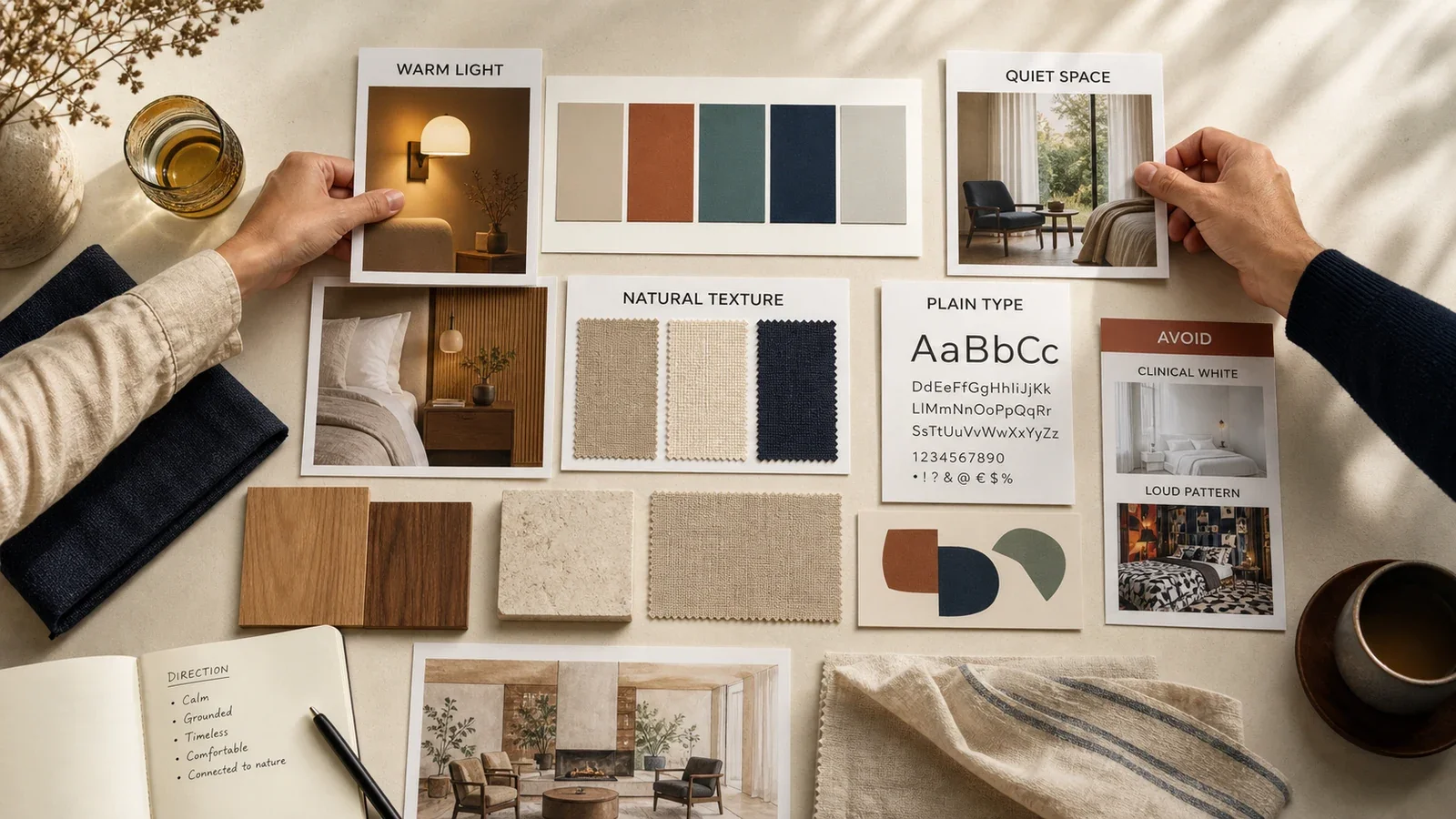
A mood board is a curated set of visual references used to explore and explain a direction. It may include color, type, images, materials, shapes, layout, motion, sound notes, and short words.
A mood board is not the final design. It is a discussion tool. It helps a team decide what a direction means before time is spent on finished logos, pages, packaging, spaces, or campaigns.
How Does a Mood Board Work?
The team starts with an approved brief. It gathers references that express the intended position and feeling. Each item has a reason. The team reviews the board as a whole, removes conflicts, and records what is approved or rejected. Designers then create original work from the direction rather than copying a reference.
What Can a Mood Board Include?
Color relationships and material samples.
Typography styles and text hierarchy.
Photography subjects, lighting, framing, and texture.
Illustration, icon, shape, pattern, and motion references.
Environmental, packaging, interface, or editorial examples.
A few words that state the direction and a few words that state what to avoid.
Why Is a Mood Board Important?
Words such as modern, warm, bold, or premium can mean different things to different people. A mood board makes those differences visible early. It supports faster discussion, clearer feedback, and a record of direction. It does not replace research, strategy, or testing.
Where Is a Mood Board Used?
Mood boards are used in branding, campaigns, web design, product design, interiors, fashion, film, photography, events, and packaging. A project may use several boards to compare directions before choosing one.
A Hypothetical Example
A wellness hotel wants to feel calm without looking clinical. One board uses soft natural light, quiet spacing, warm mineral colors, tactile paper, and plain typography. Another uses bright white rooms and medical blue. The team can now discuss which direction fits the offer and guest experience. It still needs to test the final work for access, culture, rights, and real use.
Put It in Plain Words
A team says it wants a warm brand. One person thinks warm means red and loud. One thinks it means wood and soft light. One thinks it means kind words and real faces. The word alone does not solve the gap.
A mood board puts those views where the team can see them. The team can point to what fits and what does not. It can choose the feel before it pays for final work. The board is a guide, not a set of parts to copy.
Keep the review simple. Ask what three things the board should make people feel or know. Ask which item best shows each point. Ask what does not belong. Remove weak parts. At the end, write a short note that says what the team chose and why.
How Do You Make a Useful Mood Board?
Start with the audience, position, task, and limits in the creative brief.
Choose a small number of references with clear reasons.
Show relationships, not a random gallery of attractive images.
Label source and usage rights. Do not treat found work as free final art.
Include what the direction should avoid.
Record the approved principles, then design original work.
Common Mistakes
Collecting images before the brief is clear.
Adding so many references that the direction has no focus.
Copying a logo, photo, pattern, or layout from the board.
Using only visual taste and ignoring the audience or task.
Presenting a board without explaining why each group belongs.
Frequently Asked Questions
Is a mood board the same as a style guide?
No. A mood board explores or confirms direction. A style guide records approved final rules and assets for repeated use.
Can a mood board use other brands?
It can use references for internal discussion when rights and source limits are respected. Final work should be original and legally reviewed when needed.
Start with What Is a Creative Brief?, then document final decisions in What Is a Brand Style Guide?.
Need a focused visual direction?
Book a free Brand and Tech Assessment to map the current problem, evidence, constraints, and practical next step.
Sources
- Design Council: The Double Diamond. https://www.designcouncil.org.uk/our-resources/the-double-diamond/
- U.S. Copyright Office: Copyright basics. https://www.copyright.gov/what-is-copyright/
- W3C Web Accessibility Initiative: Images tutorial. https://www.w3.org/WAI/tutorials/images/