What Is a Qualified Lead?
Learn how a qualified lead is defined, how MQL and SQL stages differ, and how fit, intent, consent, capacity, and feedback shape the handoff.

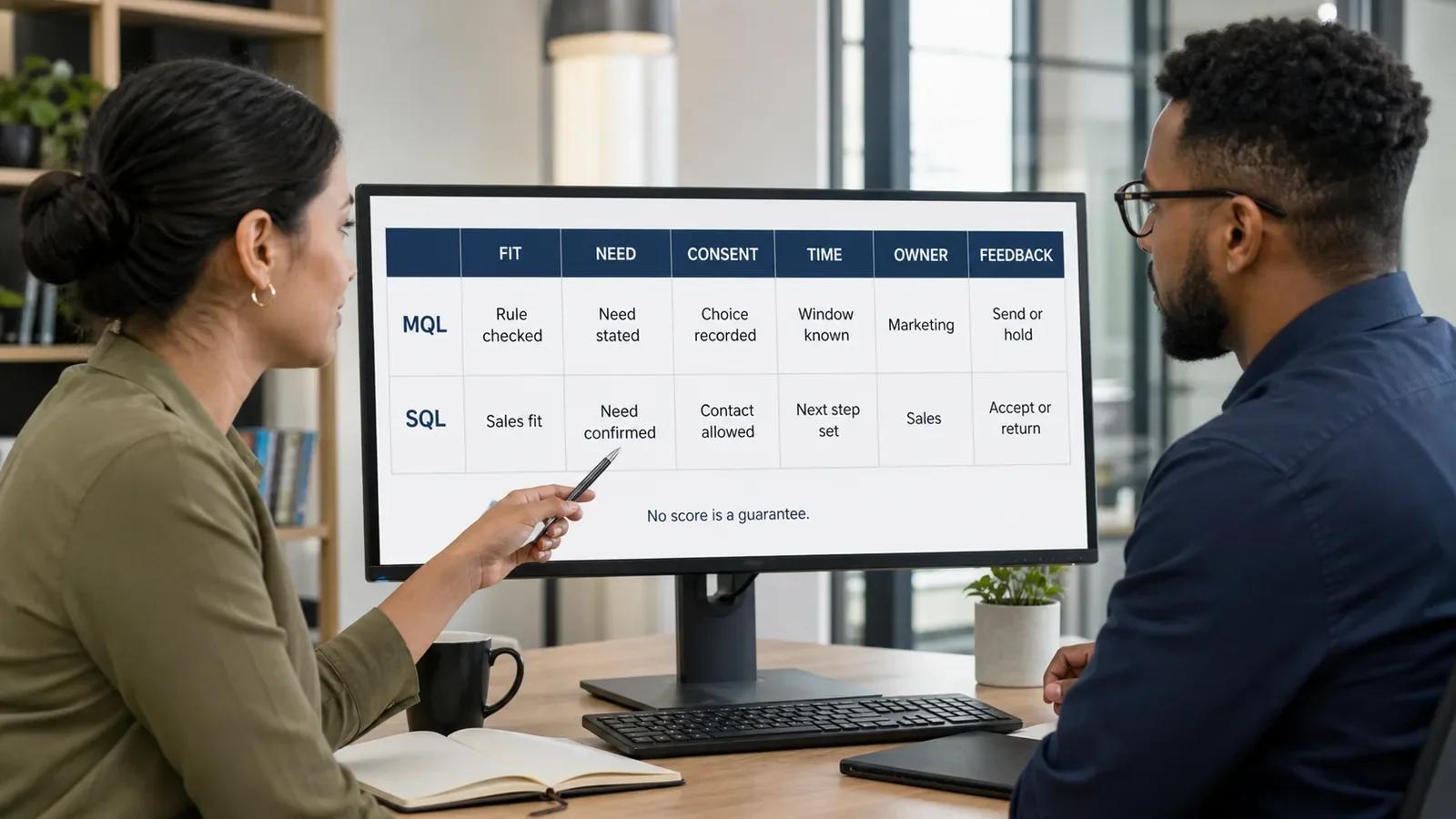
A qualified lead is a person or organization that meets an agreed set of conditions for the next step in a buying process. The conditions may cover fit, need, authority, timing, consent, risk, location, budget range, or another relevant factor.
Qualified does not mean ready to buy, valuable, or certain to close. It means the record passed a defined gate. The team should name the gate, owner, evidence, date, and next action.
Put It in Plain Words
A form fill is a name and a note. It moves to the next stage only when the team checks the rules it chose.
The rules should fit the offer. A local firm may check place, need, time, and room to take the work. A large sale may also check role and who else must agree.
Do not score a hidden trait just since you have the data. Use facts that have a clear use and that the team can treat in a fair way.
Keep fit and intent apart. A firm may fit the offer but have no need now. A person may want help but live out of range.
Set the handoff. The team that sends and the team that gets the lead need the same names, fields, owner, time, and way back.
Write why a lead was kept, sent back, put on hold, or closed. This helps the team fix a bad rule or route.
Check how much work the team can take. More leads can harm care when no one has time to help them.
Take ten old leads. Hide what took place in the end. Apply the new rule to each one.
Now show what took place. Note where the rule was wrong. Ask which fact would have helped at that point.
Keep the rule short. A long score can hide weak parts. Staff should know why a lead moved.
Give the next owner what they need. Do not make the same person tell the same facts to each team.
Set a way to send a lead back with care. A “not now” lead may need a safe hold, not more sales push.
Check the rule each month at first. Look for harm, bias, slow work, lost choice, and poor fit.
How Does Qualified Lead Work?
The team defines each stage and the evidence needed to enter it. Data may come from a stated form response, conversation, account record, behavior, referral, or product use. Automated scores can assist, but a score is only a model.
When a record meets a gate, it moves to a named owner and next action. Sales or service sends structured feedback. The team reviews false positives, false negatives, missing consent, bias, delay, and changed capacity.
Why Is It Important?
Shared qualification rules can reduce wasted handoffs and help teams focus on people the offer can fairly serve. They also make lead quality a testable process rather than a complaint between teams.
Bad rules can exclude good prospects, invade privacy, or reward easy-to-measure behavior. Qualification must not become a guarantee or an excuse for pressure.
Where Is It Used?
Lead routing, sales handoff, service intake, partner referrals, and account review.
CRM lifecycle stages, lead scoring, response rules, and capacity planning.
Analysis of channel quality, offer fit, and lost or returned leads.
A Simple Qualified Lead Example
A commercial cleaning firm may define a qualified lead as an authorized contact for a building inside its service area, with a stated cleaning need, a suitable start window, and consent to be contacted. Price fit may require a conversation.
A website visit alone would not meet that gate. A score based on visits should not silently invent authority, budget, or consent.
What Should a Qualification Rule Include?
The stage name and business purpose.
Required fit, need, intent, and consent evidence.
Fields that are relevant and fair.
The owner, response time, and next action.
Return, pause, rejection, and appeal reasons.
Review dates, capacity limits, and privacy controls.
How Do You Define Qualified Leads?
Map the real buying and service path.
Define a small set of stage gates.
Name the evidence for each rule.
Test the rules on past and new records.
Track handoff results and return reasons.
Revise rules when the offer or capacity changes.
MQL vs. SQL
A marketing qualified lead, or MQL, is a contact or company that marketing has judged ready for a sales handoff under its agreed rules. A sales qualified lead, or SQL, is one the sales team has accepted as a potential customer under its own gate. Those are common definitions, not universal law.
Some teams use product-qualified, service-qualified, or opportunity stages. The label matters less than the shared definition, evidence, owner, and next action.
Common Mistakes
Calling every form fill an MQL.
Using one score without checking what it represents.
Confusing fit, intent, authority, and consent.
Hiding rejection reasons from marketing.
Keeping rules that no longer match capacity.
Frequently Asked Questions
What makes a lead qualified?
The lead meets the written gate for a named next step. The gate should use relevant evidence and be shared by the teams that send and receive the record.
Is lead scoring the same as qualification?
No. A score can support a decision, but the qualification gate explains what the score means, which evidence matters, and when human review is required.
Can a qualified lead become unqualified?
Yes. Need, timing, fit, consent, ownership, data quality, or capacity can change. Record the reason and allow a fair return path.
Build the operating path with How to Get More Qualified Leads and review the wider system in How to Improve Lead Generation.
Need marketing and sales to use the same qualification gate?
Book a free Brand and Tech Assessment to map the current problem, evidence, constraints, and practical next step.
Sources
- HubSpot Knowledge Base: Use lifecycle stages. https://knowledge.hubspot.com/records/use-lifecycle-stages
- UK Information Commissioner’s Office: Plan direct marketing. https://ico.org.uk/for-organisations/direct-marketing-and-privacy-and-electronic-communications/direct-marketing-guidance/plan-direct-marketing/