What Is Brand Governance?
Learn how brand governance turns standards into owned decisions, access rules, approvals, exceptions, records, and reviews across teams and partners.

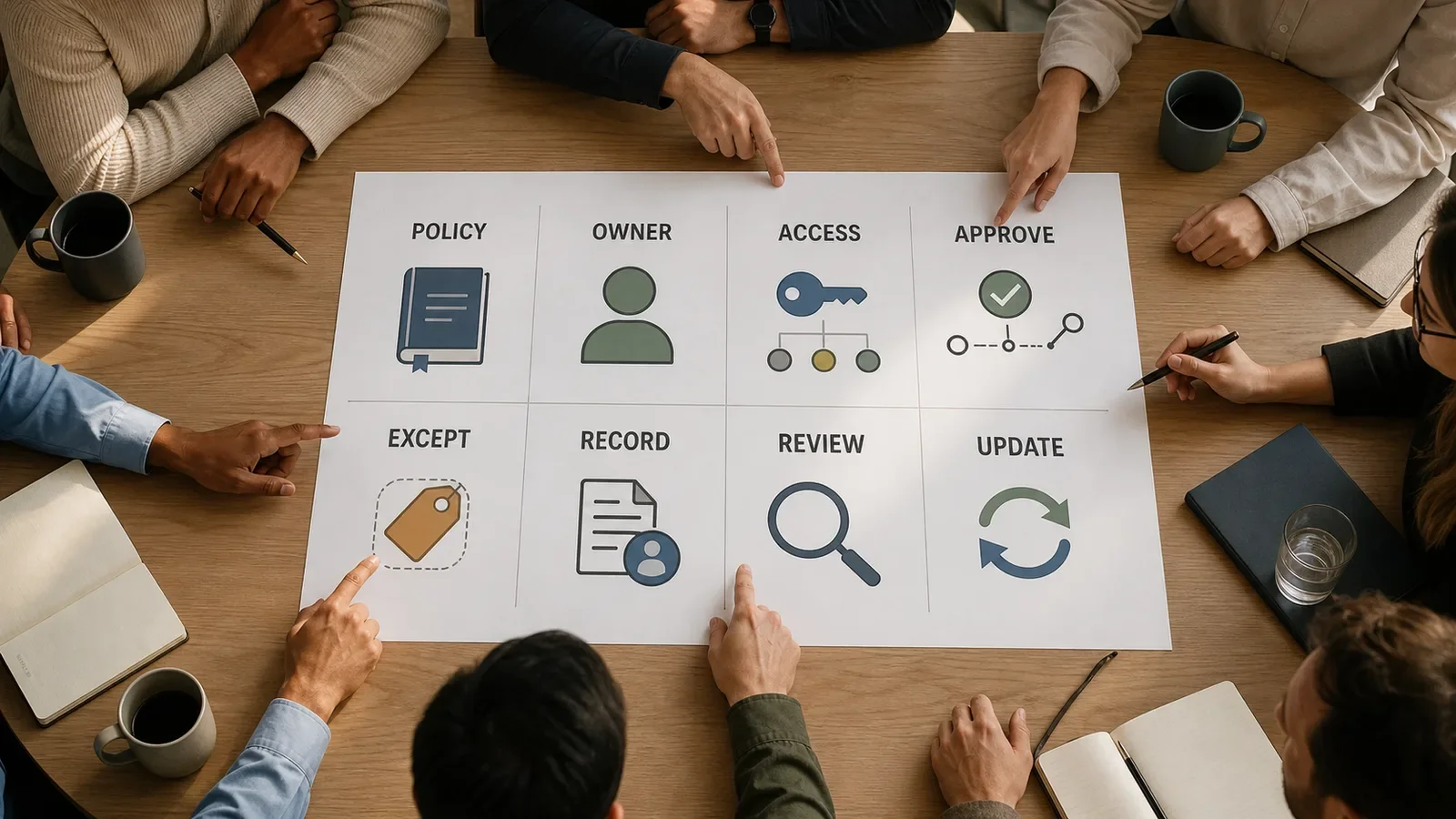
Brand governance is the system used to decide how a brand may be represented, who may make or approve changes, and how the rules stay current.
It joins standards with roles, access, review paths, exception handling, records, and upkeep. A guideline file can be part of the system, but the file alone is not governance.
Put It in Plain Words
A brand may have rules for its name, marks, type, color, voice, claims, images, and local use.
Governance says who owns each rule and who can approve a new use.
It also says where approved assets live and who can download or edit them.
A clear path helps a team decide when a request follows the rule and when it needs review.
An exception should name its scope, reason, owner, and end date.
A record of approvals can help people learn why a choice was made.
Rules need versions so teams can tell which one is current.
Old assets should be marked or removed so they do not keep returning to new work.
Local teams may need room to adapt language or examples to their market.
That freedom still needs a boundary for law, rights, access, and core identity.
A small firm may use a short owner list and one review step.
A large group may need roles by region, channel, product, or risk level.
Tools can route work, but a tool cannot decide the brand purpose on its own.
Checks can flag a possible issue, but a person should own the final call.
The rules should cover firms and shops that make work for the brand, not just staff.
The system works when people can find the rule, grasp it, act, and ask for help.
Think of a new sales deck. The team knows which logo file to use. It can see who may sign off on a new claim. It knows where to ask if the rule does not fit. The owner can see the choice and keep a note. This is the work of the system.
Now think of an old deck. Its mark and phone line are out of date. A clear file name and end date help the team spot that risk. The old file is kept only when the law or the work needs it. It is not left in the main kit by chance.
A Quick Check Before You Use It
Name the owner of every major brand standard.
Show who can view, use, edit, and approve each asset.
Define an exception path with a record and expiry.
Keep one current source for rules and approved files.
Set review dates and a way to retire old material.
How Does Brand Governance Work?
Start with the decisions that carry the most risk or confusion. Map the current rules, owners, tools, review steps, and common exceptions. Remove duplicate sources before adding new process.
Assign simple roles, publish the approval path, and test it on real work. Review both the rule and the delay it creates. A useful system protects integrity while letting routine work move.
Why Is It Important?
Governance reduces guesswork when many people create public work. It can limit inconsistent use, unclear rights, outdated files, unsupported claims, and review loops.
It also makes responsibility visible. Consistency is not the only goal. Teams need lawful, accessible, accurate, useful, and locally suitable work.
Where Is It Used?
Brand portals, asset libraries, and design systems.
Campaign, website, social, sales, and partner reviews.
Naming, logo, voice, claim, and image approvals.
Multi-brand, multi-region, and franchise operations.
AI-assisted content policies and human review workflows.
A Plain Brand Governance Example
A regional team needs a local campaign. The portal shows approved marks, voice rules, image rights, and the local reviewer. A new legal claim follows a higher-risk path.
The final decision is recorded with its market, channel, owner, and end date. Later teams can reuse the approved pattern without treating one exception as a permanent rule.
What a Governance System Needs
A current policy source with clear scope and versions.
Named owners, users, approvers, and escalation contacts.
Access, rights, approval, and exception rules.
Approved assets, templates, examples, and retired-file controls.
Review dates, decision records, feedback, and change communication.
How to Set It Up
Inventory rules, assets, owners, tools, and recurring disputes.
Group work by risk and give routine work a short path.
Define permissions, approvals, exceptions, records, and expiry.
Test the process with staff, agencies, and local teams.
Measure clarity, reuse, review time, errors, and unresolved needs.
Brand Governance vs. Brand Guidelines
Brand guidelines explain how the brand should appear and sound. Brand governance defines how those rules are owned, applied, changed, approved, and checked.
A detailed guide can still fail when no one owns it or old files remain easy to use. Governance turns guidance into an operating system.
Common Mistakes
Treating a PDF as the whole governance system.
Making every small choice wait for one senior approver.
Giving vendors assets without rights or usage rules.
Allowing exceptions with no scope, record, owner, or end date.
Using automated brand checks as the final decision maker.
Frequently Asked Questions
Does a small business need brand governance?
Yes, but it can be light. Name the owner, store current assets in one place, define the few important rules, and record unusual approvals.
Is brand governance the same as brand management?
No. Brand management covers wider strategy and activity. Governance focuses on decision rights, standards, controls, exceptions, records, and upkeep.
Can software enforce brand governance?
Software can manage access, versions, checks, and approvals. People still need to set the policy, judge context, and own exceptions.
Use the Brand Guidelines Guide for the standards document and Brand Consistency in AI-Generated Ads for governed AI-assisted work.
Need a governance model that gives your team clear rules, useful freedom, accountable decisions, and safer review paths?
Book a free Brand and Tech Assessment to map the current problem, evidence, constraints, and practical next step.
Sources
- Adobe Experience Manager: How to import and use a brand policy. https://experienceleague.adobe.com/en/docs/experience-manager-cloud-service/content/ai-in-aem/agents/governance/how-to-import-a-brand-policy
- GOV.UK Design System: Community contribution and review process. https://design-system.service.gov.uk/community/