Why Simplicity Wins Online
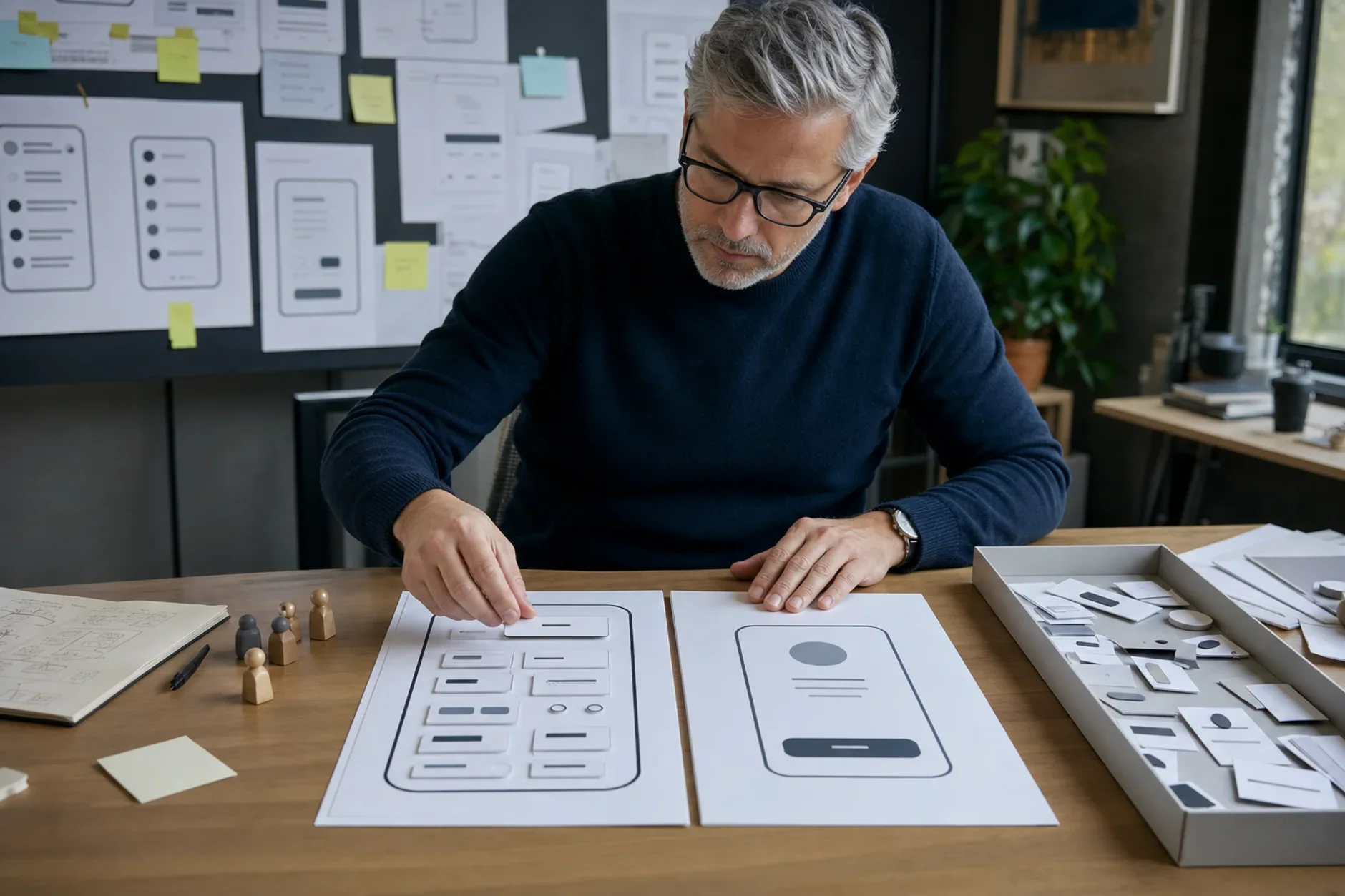
Everyone wants their website to feel rich, ambitious, and full. The sites that actually perform are ruthlessly simple. Online, less almost always beats more.


Most people believe a serious company needs a big website. More sections, more features, more pages, more to say. Empty space reads like a lack of ambition. So teams fill every screen to prove they are doing a lot. More content, they think, means more credibility.
The truth runs the other way: simplicity wins online, almost every time. The web punishes complexity in ways the physical world does not. The sites that convert best are brave enough to leave things out. Restraint is not a lack of effort, it is the hardest kind there is.
Why the conventional wisdom is wrong
Adding feels productive and safe, while removing feels risky. So teams keep stacking, certain that each new thing can only help. But on the web, every addition carries a cost the room never charged you for.
Every extra choice slows the visitor down. It also raises the odds they choose nothing at all.
Every extra element you add competes for the eye. And that focus is what your one key message needed.
Every extra feature adds weight. That weight slows the page for everyone.
Every extra page blurs the path you wanted people to walk.
What is actually true
A visitor lands with a question and limited patience. The simple site answers it and points clearly to the next step. The complex site makes them wade, choose, and interpret, and a good share of them just leave. Clarity converts because it respects how little attention people bring to a screen.
Simplicity is not minimalism for style points. It is the discipline of deciding what matters most. Then you refuse to let the rest crowd it out. The fewer things on the page, the more weight each one carries, including the action you want taken.
What we see at TTGC
We work with brands that could justify huge, sprawling sites. Yet the best work we ship for them is consistently the most restrained. Our hardest conversations are not about what to build. They are about what to cut. We routinely talk clients out of sections they were attached to, because the page was stronger, and converted better, without them.
We tell clients that simplicity is an edge. Their rivals are too nervous to use it. Anyone can add. Deciding what to remove takes conviction. That conviction makes a site feel premium and perform at the same time.
The honest take
When in doubt online, take it out. The instinct to fill the page is the very instinct working against you. The clearest, fastest, most focused version of your site almost always wins, not because it says less, but because what it says actually lands.
Sources
Nielsen Norman Group, research on choice, simplicity, and how we decide online. nngroup.com
TTGC web practice, simple, proven builds for content-rich brands.
Ready to work with Through The Glass Creatives?
Book a free Brand and Growth Assessment and see exactly how Mherie, Ravve, and the TTGC team would approach it.
Related reading: The Fastest Website Usually Wins · Simplicity Is the Most Undervalued Design Principle