What You Can Actually Do With a Digital Twin Avatar
Skip the vague "scale yourself" pitch, here are the concrete tasks a digital twin avatar handles well, and the ones it still doesn't.

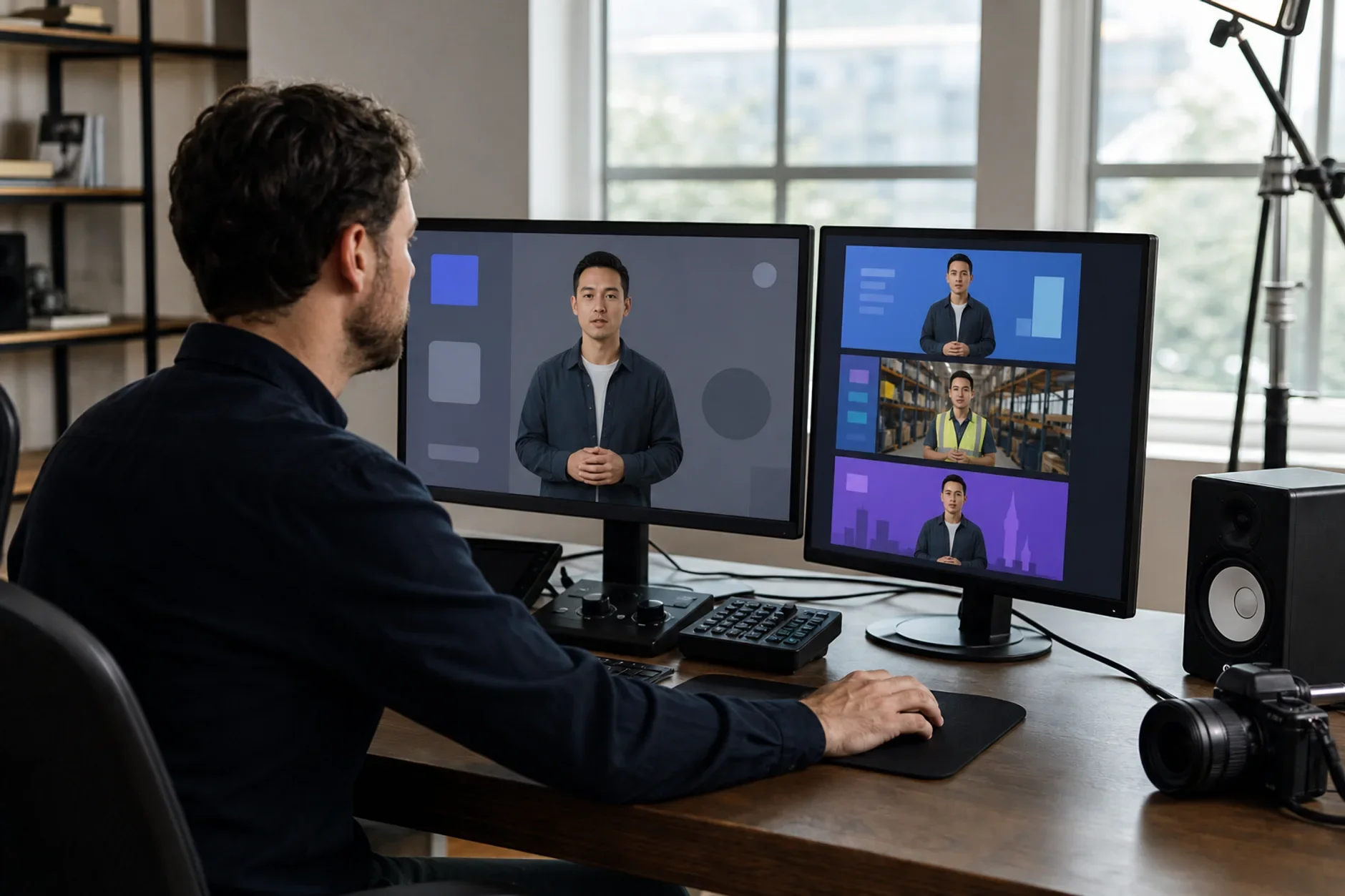
Most digital twin avatar use cases are sold with hype. So it helps to be practical. The real question is simple. What in your actual week could this handle without making you look bad? That is the question that matters. And it is the one most of the marketing skips. So here is a grounded list of real use cases. They are grouped by how well today's tools handle each one.
Here is the honest frame. A digital twin avatar works best in three cases. The output is repeatable. The stakes are medium or lower. And you have fed it enough of your real content to draw from. It works worst in three other cases. The context keeps changing. A relationship is at a fragile stage. Or the other person would feel fooled to learn they were not talking to you.
Use Cases That Work Well Today
In these areas the tech is mature enough to add real value. The risk of failure is low:
Course and training content delivery: your avatar records the module walkthroughs. It records the explanations and the updates too. So you do not sit in front of a camera each time.
FAQ and inbound knowledge responses: your avatar handles the same 30 questions your audience always asks. It does so in your voice and with your point of view.
Social content repurposing: start with long content like podcast episodes, interviews, and articles. Turn each one into a short clip or a written post that sounds like you.
Email and newsletter drafts: your avatar writes the first drafts. They still need your point of view, but they follow a template you know well.
Onboarding sequences: walk new clients or team members through the standard steps. Give them the context, all in your own style.
Use Cases That Work - With Conditions
These work, but a human must review the output before it goes out:
Discovery call pre-screening: the avatar asks the first qualification questions before you get on a real call. You then look over the transcript.
Proposal and pitch draft generation: the twin builds a rough version from the positioning you are known for. Then a human steps in and refines it.
Client communication when the stakes in a relationship are lower. That means things like a status update, a bit of scheduling logistics, or a routine check-in.
Use Cases That Are Still Too Early
These need skills that current tools do not deliver well. Think live negotiation. Think crisis messages. Think high-stakes relationship repair. The same goes for any talk where the other person wants deep personal contact. In these cases a twin is a risk. It is not a time saver.
Making It Repeatable With Kyndrify
Here is one key lesson. The value of a digital twin avatar grows with consistency. Say your course content sounds like you this week. Then it sounds generic next month because you used a different model. You have lost the whole point. Kyndrify solves this. It puts all the relevant models behind one framework. So you do not rebuild your avatar each time the tools shift. You get the same voice, the same style, and the same quality. That holds true no matter what changes at the model layer. That consistency is what makes these use cases scalable, not just possible.
Start with the highest-value, lowest-risk use case. That is usually course content or FAQ responses. Build from there. Once you trust the output in low-stakes settings, you will have a much better read on where to expand.
Sources
McKinsey & Company - research on AI productivity applications. It looks at the work of knowledge workers. You can find it at mckinsey.com
TTGC / Kyndrify - patterns we see as we build AI avatar tooling.
Ready to work with Through The Glass Creatives?
Book a free Brand and Growth Assessment and see exactly how Mherie, Ravve, and the TTGC team would approach it.
Related reading: What Skills Should Your AI Avatar Actually Have? · What Is an AI Avatar Digital Twin and How Does It Work?