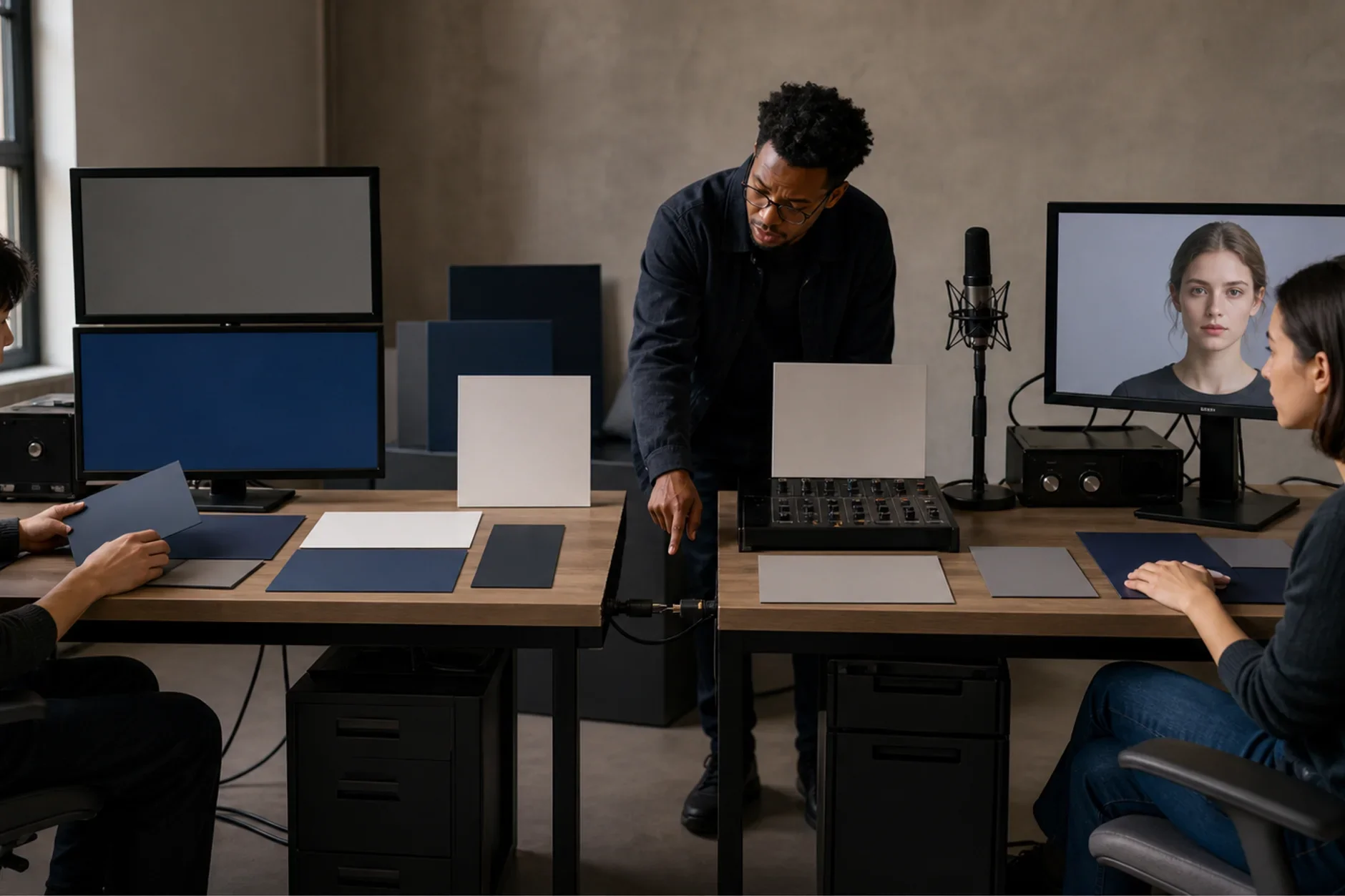
Is It Possible to Clone Your Voice for an AI Avatar?
Voice cloning is technically possible, but "cloned" and "sounds like you" are not the same thing, and the gap is bigger than most platforms admit.

AI voice cloning is one of the most common client questions about voice synthesis tools. The short answer is yes. Most serious platforms can build a voice model from your audio samples. That model will fool a casual listener most of the time. But the word "clone" carries a lot of weight. It can set you up for disappointment once you use the output in a real setting. Cloning a voice still needs your clear consent and ownership of the source audio.
A cloned voice and a voice that sounds like you in real talk are not the same thing. A clone can match your tone, your pitch, and your basic rhythm. Here is what it usually cannot do. It cannot match your real emotional texture. Think of how your voice softens when you explain something you care about. Then think of how flat it sounds when you recite from memory. That gap is where most clones give themselves away.
How Voice Cloning Actually Works
Most voice synthesis systems fall into two groups. The first is zero-shot cloning. You give the model a short sample, from a few seconds to a few minutes. It then makes audio in your voice. The second is fine-tuned models. The system trains on your audio over a longer process. Zero-shot is fast. It keeps getting better at surface-level similarity. Fine-tuned models take more time and more data. In return, they give steadier, richer results across more content. Neither one is wrong. They suit different jobs.
Zero-shot: good for fast prototyping, short-form content, and cases where close enough will do.
Fine-tuned: better for long-form content, emotionally varied scenes, and cases where the listener knows you well.
Neither one handles pacing, breath, filler words, or the way you move between thoughts on its own.
What Degrades Voice Clones in Real Use
The failure modes are easy to spot once you know the signs. Synthetic voices tend to flatten emotion. Everything comes out at about the same intensity, whatever the content. They struggle with long sentences. Natural speech would add tiny pauses or drop the stress on some words. They also miss how you handle hesitation. Maybe you fill silence with "um." Maybe you just pause. Maybe you repeat a phrase while you think, or stay quiet. These are the fingerprints of human speech. They are also what makes a clone feel slightly off, even when a listener cannot say why.
Input Quality Is Everything
Most guides bury one fact in the fine print. The quality of your source audio sets the ceiling for your clone. Say your samples were recorded in an echoey room, on a laptop mic, with noise in the background. The clone will learn that setting along with your voice. You cannot fully split your voice from the room it was recorded in. Clean, studio-quality recordings produce far better clones than field recordings. This is not optional. It is the single biggest quality factor that most people can actually control.
Where Kyndrify Fits Into This
The voice cloning field moves fast. Models that led the pack six months ago have been passed. The hard part is not cloning a voice once. It is keeping a steady voice output as the tools keep changing. One useful thing about Kyndrify is that it hides the model layer. You do not pick one synthesis engine and then scramble when that engine changes. The platform routes your voice data through a framework built to stay consistent across model updates. That repeatability matters a lot when you produce content at volume. You do not want your voice avatar to sound different from one batch to the next just because the model was updated.
Voice cloning is real. It works well enough for most uses if you go in with clear expectations. It will not be a perfect match for you in every case. Done well, it gets you far enough that most listeners in most settings will not question it. That is genuinely useful.
Sources
IEEE Transactions on Audio, Speech, and Language Processing. Voice synthesis and cloning research. ieee.org
ElevenLabs technical documentation. Voice cloning methodology. elevenlabs.io
TTGC / Kyndrify. Patterns from building AI avatar tooling.
Ready to work with Through The Glass Creatives?
Book a free Brand and Growth Assessment. See exactly how the TTGC team would approach it.
Related reading: Voice Cloning for Avatars: What's Possible and What's Creepy · What Is an AI Avatar Digital Twin and How Does It Work?